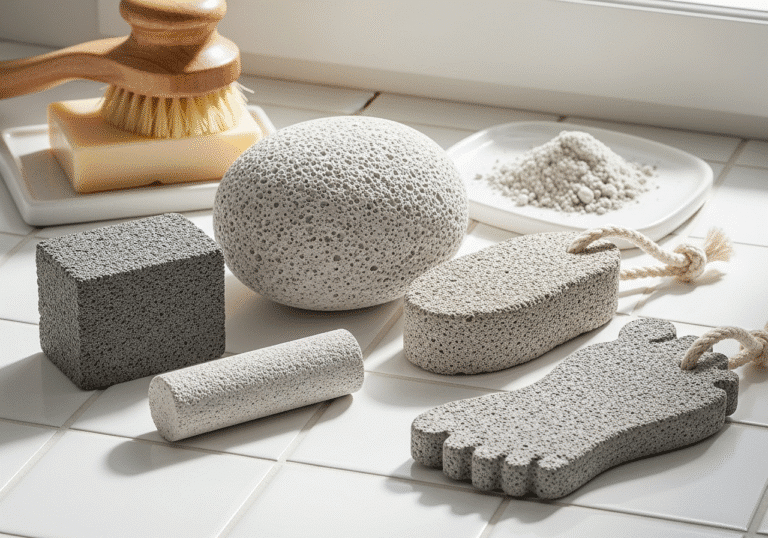










In the modern arsenal of cleaning supplies, we are accustomed to complex chemical solutions. We rely on sprays that dissolve grease, foams that lift dirt, and liquids that bleach stains. We have become chemists in our own homes, mixing and matching bottles in an attempt to maintain a pristine environment. However, there is a category of filth that defies chemistry. Hard water deposits, calcified mineral rings in toilets, and carbonized layers of burnt food often laugh at the strongest acids and alkalis found in the supermarket aisle. To conquer these stubborn, physical barriers, one must turn away from modern chemistry and look toward geology. The pumice stone, a humble block of volcanic rock, remains one of the most effective, eco-friendly, and powerful tools for deep cleaning. It operates on the principle of abrasive mechanics rather than chemical reaction, physically grinding away the offender. Yet, because it is a rock, it carries a risk profile that requires a specific technique to ensure it destroys the dirt without destroying the surface underneath.
How is Pumice Stone Created?
To understand how to wield a pumice stone effectively, one must first understand what it is. Pumice is created when super-heated, highly pressurized rock is violently ejected from a volcano. The rapid cooling and depressurization create a stone that is filled with gas bubbles, making it incredibly light and porous. This structure is what gives pumice its cleaning power. It is hard enough to cut through mineral deposits and rust, but because it is brittle and porous, it breaks down as you use it. This “sacrificial” nature is its safety feature. As you scrub, the stone shapes itself to the surface you are cleaning, creating a paste of abrasive grit that polishes rather than gouges-provided it is used correctly.

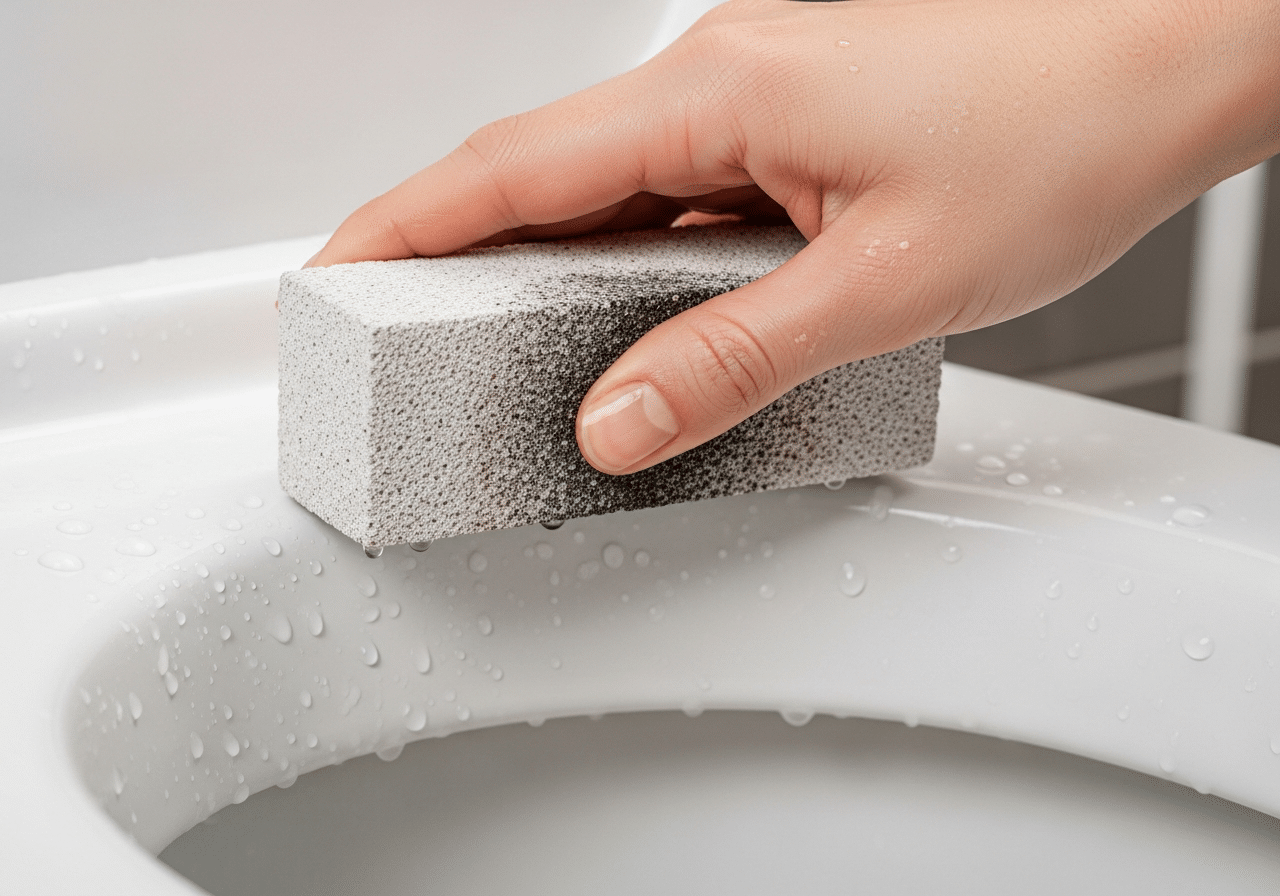
The most famous application of the pumice stone is in the bathroom, specifically for the toilet bowl. In areas with hard water, a grey or yellow ring often forms at the waterline. This is calcium carbonate and limescale, and once it hardens, it bonds to the porcelain with the strength of concrete. Toilet brushes glide right over it, and standard blue cleaners merely tint it. The pumice stone is the eraser for this ring. However, the cardinal rule of using pumice on porcelain is hydration. You must never, under any circumstances, use a dry pumice stone on a dry surface. A dry stone is too hard and will scratch the glaze of the porcelain, leaving behind grey marks and microscopic grooves that will trap dirt even faster in the future.
How to Use it Correctly
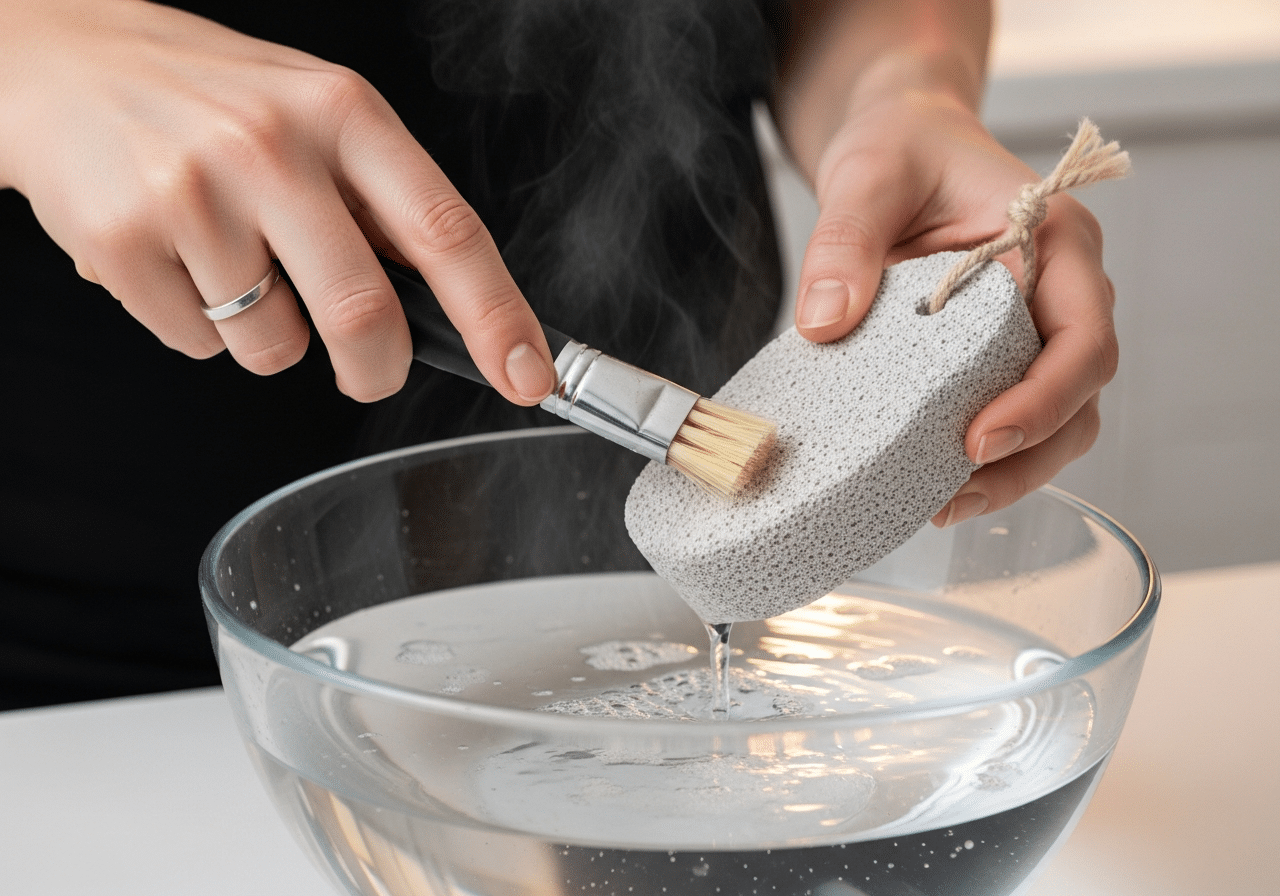
The correct technique involves submerging the pumice stone in the toilet water until it stops releasing bubbles, indicating it is fully saturated. Simultaneously, the surface you are cleaning must be wet. With both stone and surface lubricated, you scrub the ring with gentle, back-and-forth pressure. You will hear a sound that can be unnerving-a gritty scratching noise-but as long as the water is present, this is the sound of the scale being pulverized, not the porcelain. As you work, the stone will wear down, creating a grey mud. This mud acts as a secondary polishing compound. Periodically dip the stone back in the water to rinse it and keep the lubrication high. The result is a porcelain surface that looks brand new, stripped of minerals that may have been accumulating for years.
While the toilet is the primary domain of the pumice, its utility extends to the kitchen, specifically the oven. The oven racks are notoriously difficult to clean. They accumulate layers of polymerized grease and carbon that wrap around the metal bars like a second skin. Soaking them helps, but often mechanical force is needed to rip that carbon off. A pumice stone is ideal for this. Because the stone is softer than the steel of the oven racks, it will strip the carbon without damaging the structural integrity of the metal. It shapes itself around the cylindrical bars of the rack, getting into areas that a flat scouring pad cannot reach. This generates a significant amount of dust and debris, so it is a task best performed over a sink or even outdoors, but it restores the metal to a shine that chemical oven cleaners often fail to achieve.
Cast Iron
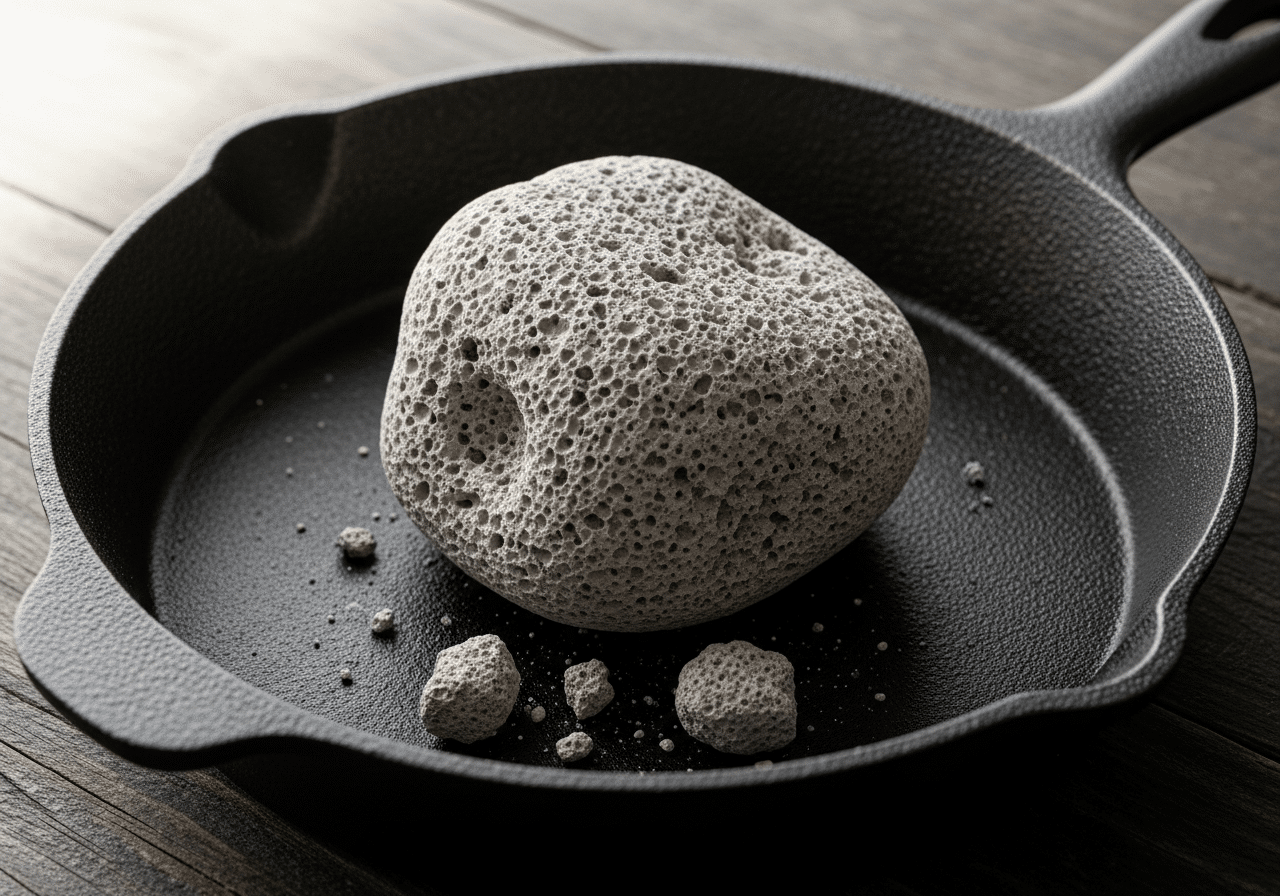
Cast iron cookware restoration is another area where the abrasive nature of pumice shines. If a cast iron skillet has been neglected and has developed a layer of surface rust, a pumice stone can be used to scour the rust away down to the bare metal. It is faster and more effective than steel wool for heavy rust removal. However, this is a nuclear option; it will remove the seasoning along with the rust. After using pumice on cast iron, the pan must be thoroughly washed to remove the rock grit and then immediately re-seasoned to protect the raw iron. It is a restoration tool, not a daily maintenance tool.
Swimming pools with tile borders often suffer from the same calcium buildup as toilets. A white, crusty line forms where the water meets the tile. Professional pool cleaners have used pumice stones for decades to address this. The stone is safe for ceramic tile (again, strictly when wet) and can grind away the calcium line without affecting the pool water chemistry. There are even pumice stones designed to mount on tele-poles to allow cleaning without draining the pool.
In What Situations Should you Never use Pumice Stone?
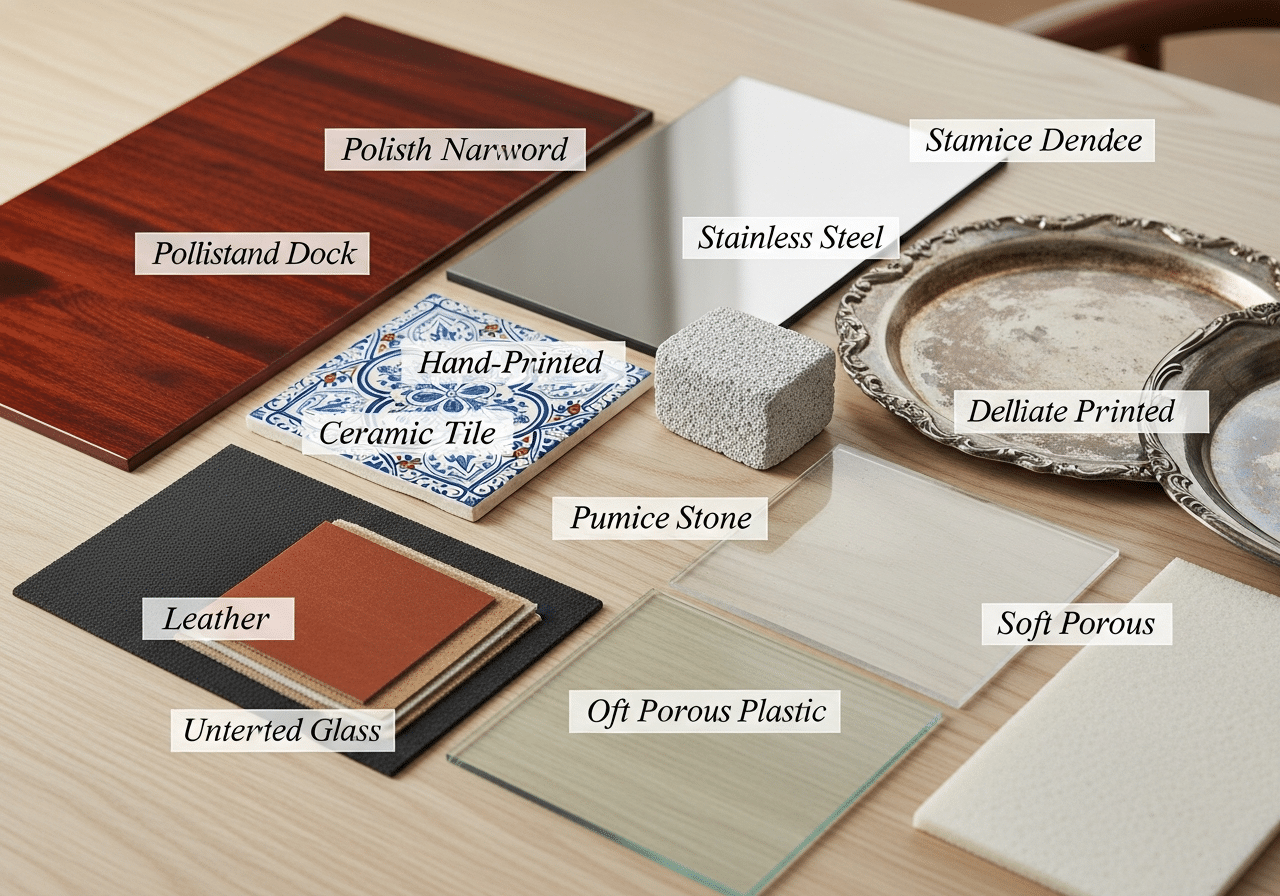
However, the power of the pumice stone comes with a list of prohibited surfaces that is just as long as its list of uses. Understanding the hardness scale is vital. You cannot use pumice on fiberglass, acrylic, or plastic. Many modern bathtubs and shower surrounds are made of fiberglass composites. If you take a pumice stone to these, you will instantly ruin the finish, creating a swirl of deep scratches that will look dull and dirty forever. It is also unsafe for chrome finishes, such as faucets or showerheads, and stainless steel appliances. The stone will leave a brushed, scratched texture on mirror-finish metals. It is essentially sandpaper; you would not sandpaper your bathroom mirror, and you should not pumice it either.
There is also a distinction to be made between natural pumice and synthetic pumice bars. Natural pumice is grey or beige, irregular, and varies in density. Synthetic pumice, often sold as “scouring sticks,” is usually white or blue, uniform in texture, and made from recycled glass or foamed ceramics. Synthetic sticks are often safer for cleaning because they are engineered to be free of the harder impurities sometimes found in natural volcanic rock. These impurities, small crystals of harder minerals, can cause unexpected scratches even when the user is careful. For household cleaning, a high-quality synthetic scouring stick is often the more consistent and reliable choice.
Carpets and Upholstery
An unexpected but highly effective use for the pumice stone is the removal of pet hair from upholstery and automotive carpets. The porous, rough texture of the dry stone acts like a magnet for fur. When dragged lightly across the fabric of a car seat or a sofa, the stone grabs the fine hairs that a vacuum cleaner leaves behind. It pulls them out of the weave and balls them up for easy removal. This must be done with a light touch to avoid abrading the fabric itself, but for car detailers dealing with stubborn dog hair, it is a secret weapon that outperforms almost any rubber brush or adhesive roller.

The lifespan of a cleaning pumice stone is relatively short compared to other tools. Because it works by disintegration, it shrinks with every use. A single heavy-duty session on a neglected toilet ring might consume half the stone. This makes them a consumable item rather than a permanent fixture in the cleaning caddy. However, given their low cost and high effectiveness, the return on investment is substantial. They prevent the need for expensive, harsh chemicals and can save a fixture that might otherwise need replacing.
Stone Cleaning
Hygiene of the stone itself is a consideration. After scrubbing a toilet or a rusty grate, the porous stone is filled with bacteria and debris. It should be rinsed thoroughly with hot water and potentially soaked in a disinfectant solution if it is to be kept. However, because they are inexpensive and porous, many people choose to cut the stone into smaller pieces and treat them as single-use items for particularly dirty jobs, discarding the fragment after the work is done to prevent cross-contamination.
The environmental profile of the pumice stone is excellent. It is a naturally occurring material (or a glass-based synthetic) that is non-toxic and chemically inert. It does not release volatile organic compounds (VOCs) into the home air, and it does not flush phosphates or harsh chlorides into the water system. For households with septic systems, pumice dust is heavy and settles, but generally does not harm the bacterial balance of the tank in the way that bleach or heavy acids do. It represents a mechanical approach to cleaning that aligns with green living principles.
Ultimately, the pumice stone is a tool of last resort and deep restoration. It is not for the weekly wipe-down. If you are reaching for the pumice, it implies that regular maintenance has failed or that you are reclaiming a neglected space. It requires physical effort-elbow grease is the active ingredient. It demands a tactile sensitivity; you must feel the stone working against the stain and know when to stop before you hit the substrate. It is a reminder that sometimes, the oldest tools are the best tools, provided they are used with knowledge and respect for the materials involved.
Managing the deep-seated mineral deposits and stubborn buildup that require a pumice stone is a labor-intensive process. It involves getting up close and personal with the grimiest parts of the home, from the toilet bowl to the oven interior. While the results are transformative, the effort required can be daunting, and the risk of scratching delicate surfaces is real if the technique is imperfect. When the scale creates a barrier you cannot break, or when you want to ensure your fixtures are restored without damage, professional assistance is the solution. Toronto Shine Cleaning understands the abrasive hierarchy of cleaning tools. We know exactly where a pumice stone can be used safely and where it must be avoided. Our professional team brings the expertise to tackle the hardest water stains and the deepest carbon buildup, restoring your home’s surfaces to their original brilliance. Whether you need a restorative deep clean to banish years of limescale or regular maintenance to prevent it from returning, Toronto Shine Cleaning has the skills to handle the heavy scrubbing. By entrusting your home to us, you ensure that every fixture is treated with the right tool, leaving your space spotless, undamaged, and gleaming.