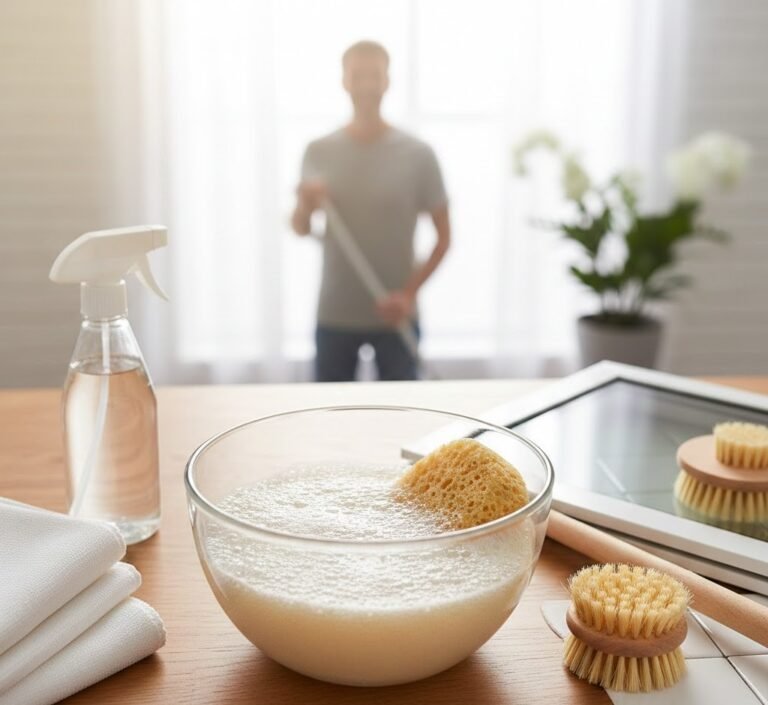










Detergent and Warm Water: The Cleaning Duo That Does It All
Shelves full of specialty sprays make it easy to forget that the most reliable cleaner in any home costs pennies per bucket. Detergent and warm water tackle an astonishing range of household grime through simple chemistry, and understanding how the pair works turns a habit into a deliberate tool. Warm water provides the energy to loosen dirt while detergent provides the mechanism to lift and trap grease, which makes the solution stronger than the sum of its parts. Here are three ways to put the mixture to work across the whole house.
Why the Chemistry Works So Well
Heat gives water an edge. Warm water molecules move faster than cold ones, so they agitate and break down sugar crystals, salt rings, and other common messes, and warmth melts fats and oils that cold water only smears around. Picture a greasy plate under the tap: cold water makes the fat congeal and slide, while warm water melts it off in seconds. The detergent brings the real genius: dish soap contains surfactants, two sided molecules with a hydrophilic head that loves water and a lipophilic tail that loves oil. When soap meets greasy water, the tails latch onto the oil droplets while the heads face outward, forming tiny spheres called micelles that trap the grease and rinse it away down the drain. Surfactants also break the surface tension that makes water bead up, so the solution spreads, penetrates tiny crevices, and lifts dirt that plain water simply flows over.
Tip 1: Clean Counters, Cabinets, and Walls the Gentle Way
For daily kitchen duty, a cloth barely damp with diluted dish soap in warm water often beats stronger sprays. It lifts food residue, light grease spatters, and sticky fingerprints from laminate, quartz, and sealed stone with no chemical smell or streaky film. The same solution is a hero on cabinet fronts, where aerosolized cooking grease builds a sticky film that resists all purpose cleaners: wipe with a warm, soapy cloth that has been wrung out well and the grime dissolves. Walls, baseboards, and door frames also respond beautifully to the mixture, which lifts scuffs, fingerprints, and accumulated dust without harming the paint finish.
Tip 2: Mop Floors Without the Sticky Residue
Vinyl, linoleum, and ceramic tile floors respond well to a bucket of warm water with just a little detergent. Restraint is the rule: use the detergent sparingly, because too much requires endless rinsing, and wring the mop out thoroughly so excess water never seeps into grout or floor seams. Done right, the method lifts dirt and footprints while leaving none of the dull, sticky film that some specialized floor cleaners deposit. In entryways and kitchens, where winter salt and cooking splatter land daily, a quick warm water mop keeps the finish from dulling and cuts down the buildup that heavy scrubbing has to fight later. It is an economical routine that keeps high traffic flooring looking fresh between deeper professional treatments.
Tip 3: Blot Out Carpet and Upholstery Stains
Many fresh food and drink spills on carpets or upholstery respond to a first line of defense made from a highly diluted solution of clear dish soap and warm water. Dip a clean cloth into the soapy water and gently blot the stain, working from the outside in to avoid spreading it. Always test the method on an inconspicuous area first, then blot the spot afterward with a cloth wet with clean water to rinse and lift out soap residue. This gentle approach often lifts the spill completely without resorting to aggressive carpet stain removers, though CDC guidance on cleaning your home is a useful reminder that surfaces should always be cleaned before any sanitizing or disinfecting step is considered.
Where This Simple Mixture Does Not Belong
Knowing the limits of detergent and warm water is as important as understanding its strengths. Keep the bucket away from these surfaces:
- Unsealed wood floors and furniture, where water causes swelling, warping, and staining.
- Natural unsealed stone such as marble or travertine, where soapy water can seep into the porous surface and darken it.
- Delicate fabrics like silk and velvet, which can spot permanently and need professional care.
- Electronics and wiring of any kind; water and electricity never mix.
For everything else, the duo is safe, effective, and economical. Handling any cleaning product responsibly still matters, and Health Canada’s tips for using household chemicals safely cover buying, storing, and disposing of cleaners, which keeps the whole household protected.
Detergent and Warm Water by the Job
| Household job | Right mixture | Why it works |
|---|---|---|
| Counters and cabinet fronts | Weak dish soap solution, well wrung cloth | Surfactants trap grease, no chemical smell |
| Vinyl, linoleum, tile floors | Small amount of detergent per bucket | Lifts dirt without sticky residue |
| Walls, baseboards, door frames | Mild soapy water, damp cloth | Removes scuffs and dust, paint stays safe |
| Carpet and upholstery spills | Diluted clear dish soap, blotting | Breaks the stain, rinse blot clears soap |
Frequently Asked Questions About Cleaning With Soap and Water
Why does warm water clean better than cold? Warm water molecules carry more kinetic energy, which helps break down sugar and salt messes, and the warmth melts fats and oils so they release from surfaces instead of congealing and smearing.
What makes dish soap dissolve grease? Dish soap contains surfactants with water loving heads and oil loving tails; the tails grab the grease, the heads face the water, and the resulting micelles hold the oil suspended until it rinses away.
Can I use detergent and warm water on hardwood floors? No, unsealed wood should never be cleaned with water because it can swell, warp, and stain; use products made for wood floors or ask a professional for advice.
Is soapy water safe for marble countertops? Natural stone is porous, and soap and water can seep in and darken or stain marble and travertine, so stick to stone specific cleaners for those surfaces.
When is a professional clean better than the DIY mixture? When grime has built up over months, when stains have set, or when the whole home needs a reset, a deep professional clean restores surfaces that daily soap and water cannot.
Let the Pros Handle the Deep Restorative Work
Detergent and warm water manage the daily messes beautifully, but some jobs need professional tools and know how. When months of buildup call for a deep, restorative clean, Toronto Shine Cleaning brings expert techniques to make every part of your home immaculate. Explore our deep cleaning services, keep results consistent with regular maid cleaning, and call (647) 424-0355 for a quote. Visit our pricing page to see how affordable professional help can be.