









Why Lemon and Salt Are a Cleaning Powerhouse
Modern marketing persuades us that effectiveness comes in a specialized bottle, a chemical formula engineered for one lone surface. Yet some of the strongest cleaners you can own were never invented in a laboratory: they sit in your kitchen. The pairing of lemon and salt is a genuine piece of applied chemistry, not folklore. The gentle acidity of citrus and the fine abrasive texture of salt work in tandem to dissolve, scrub, and shine a surprising range of surfaces, without harsh fumes or a cupboard full of single-purpose sprays.
Each ingredient has a distinct job. Lemon juice is a mild solution of citric acid, and acid is exactly what attacks alkaline mineral deposits, the calcium and magnesium behind chalky white limescale. Citric acid also cuts oxidation, the reaction that tarnishes copper and brass, and it carries a natural bleaching effect that lifts organic stains while its bright scent deodorizes rather than masks. Salt is the physical force: sodium chloride crystals are hard-edged but gentle, dislodging grime that the acid has chemically loosened, and their hygroscopic structure draws moisture out of porous surfaces. Acid dissolves, abrasive removes, and the combination outperforms either one alone.
Restore Tarnished Copper and Brass
The most satisfying use of this duo is metal restoration. Copper cookware develops a dull brown or greenish patina as oxygen and moisture react with the surface. Cut a lemon in half, dip the fleshy side into kosher or table salt until well coated, and scrub the pan exterior in firm circles. The tarnish visibly melts away, revealing the rose-gold shine underneath. For more control, or on larger pieces, squeeze the juice into a bowl, stir in salt to form a thick paste, and apply it with a soft cloth. Rinse thoroughly with warm water, then dry immediately and completely with a clean towel; skipping that final step lets fresh water spots begin the tarnishing cycle again.
The same method revives brass doorknobs, cabinet hardware, candlesticks, and decorative pieces dulled by years of oxidation, with none of the foul smells of chemical polishes.
Scour and Deodorize Wooden Cutting Boards
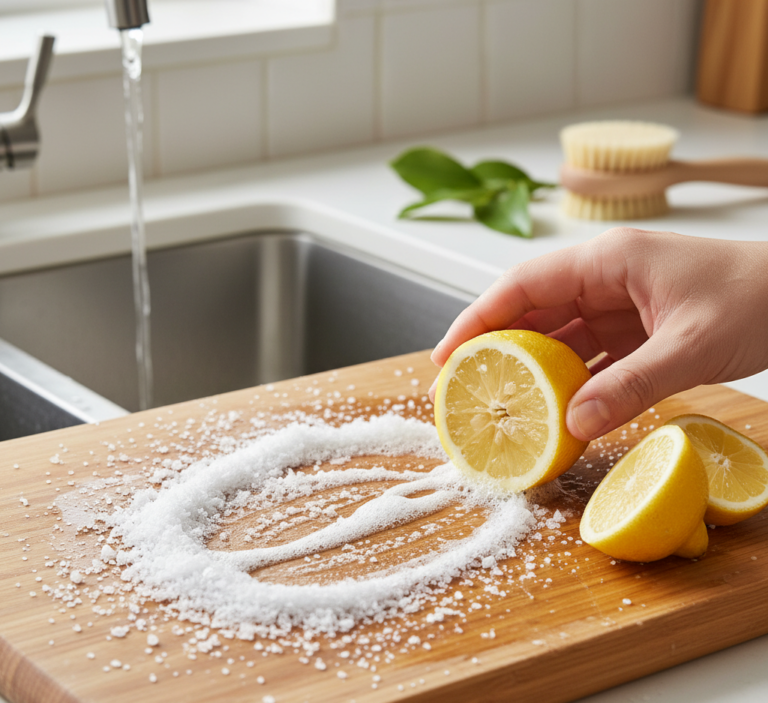
In the kitchen, this paste is food-safe where many products are not. Boards absorb garlic and onion odors and stain from berries and beets. Cover the surface liberally with coarse salt, then use a lemon half as your scrubbing tool, squeezing as you work so juice floods the salt. Let the slurry sit for 10 to 15 minutes, scrape it off with a bench scraper or spatula, wipe with a damp cloth, and let the board dry fully. The salt scours food particles from the grain while the citric acid neutralizes smells. Because cutting boards touch everything your family eats, follow the CDC’s guidance to clean food surfaces regularly, since removing residue first is what lets any sanitizer reach the germs left behind.
The duo also lifts light tea, coffee, and fruit stains from laminate countertops and butcher blocks. One critical warning: never use this acidic paste on porous natural stone such as marble, granite, or travertine. Citric acid reacts with the calcium carbonate in the stone and permanently etches the polish. Health Canada’s guidance on using household chemicals safely applies to natural products too: acids belong away from kids’ reach and sensitive surfaces alike.
Dissolve Bathroom Hard Water Stains
Chrome faucets, fixtures, and drain covers constantly wet by Toronto’s hard water collect a cloudy white film of scale. Spread a lemon-and-salt paste over the affected metal and leave it for at least 30 minutes so the citric acid can dissolve the mineral bonds. Scrub the softened scale away with a soft-bristled brush, an old toothbrush works perfectly, rinse with a clean damp cloth, and buff dry for a spot-free shine. The same paste treats small rust stains in porcelain sinks and tubs, where the acid loosens iron oxide for the salt to scour off.
Fade Rust Stains on Laundry
The pair even earns a spot in the laundry room on durable, light-colored cotton and linen. Work a paste into the rust spot, then lay the garment in direct sunlight for a few hours; UV rays catalyze the lemon’s bleaching action. Rinse thoroughly and launder as usual. Always test a hidden seam first, because citrus can fade some dyes.
Five Quick Lemon and Salt Wins
- Shine copper pots and brass hardware with a salted lemon half, rinsed and buffed dry.
- Deodorize and scour wooden boards with salt, lemon juice, a 10 to 15 minute dwell, then a scrape.
- Melt limescale off chrome with paste, 30 minutes of dwell time, a soft brush, and a dry buff.
- Lift coffee and tea marks from laminate and butcher block, never from natural stone.
- Bleach rust out of white cottons with paste plus a few hours of sun, after a seam test.
Keep this quick-reference grid handy for each surface in your home:
| Surface | Method | Caution |
|---|---|---|
| Copper and brass | Scrub with a salted lemon half, or apply a juice-and-salt paste using a soft cloth | Rinse with warm water, then dry fully right away |
| Wooden cutting boards | Coarse salt scrubbed with a lemon half, 10 to 15 minute dwell, then scrape off | Rinse, wipe with a damp cloth, and dry completely |
| Chrome fixtures and porcelain | Paste with a 30 minute dwell, loosen with a soft brush, then buff dry | Skip abrasive pads on polished plating |
| Marble, granite, travertine | Do not use this duo here | Citric acid etches calcium-based stone permanently |
When Kitchen Chemistry Meets a Real Clean
Lemon and salt handle spot jobs beautifully, but a whole home needs more horsepower. Toronto Shine Cleaning brings professional-grade technique to kitchens, bathrooms, and every surface between, and we are bonded and insured with a $1,000,000 insurance policy plus a $10,000 accidental breakage and surety bond. Book a deep clean online, browse our reviews, or call (647) 424-0355 to talk through your surfaces with the regular cleaning team.
Lemon and Salt Cleaning FAQ
How does lemon remove limescale? Scale is mostly calcium and magnesium deposits, which are alkaline. The citric acid in lemon juice chemically reacts with and dissolves those minerals, and salt gives the mixture gentle abrasion to sweep the residue away.
Can I use lemon and salt on granite or marble? No. Acid etches calcium-based stone permanently, dulling the polish. Keep the paste on metal, laminate, porcelain, butcher block, and wood, and use a pH-neutral cleaner on natural stone.
How long should the paste sit on chrome fixtures? At least 30 minutes for real scale buildup. The dwell time is what lets the acid dissolve the minerals; scrubbing immediately just wastes effort on hard deposits.
Will lemon bleach colored clothing? It can. On fabrics, reserve the sun-and-lemon rust treatment for durable light-colored cottons and linens, and always test a hidden seam before treating a visible stain.
Do these natural cleaners disinfect? They clean brilliantly by dissolving and scouring, but for genuine disinfection, the CDC advises cleaning surfaces with soap or detergent first, then sanitizing or disinfecting when needed. Lemon and salt cover the cleaning stage.