









Air Drying: What It Helps and What It Ruins
Laundry is a cycle that directly controls how long your clothes keep their shape, color, and texture. The modern tumble dryer is undeniably fast, but its high heat, constant friction, and aggressive tumbling are quietly destructive: heat makes fibers constrict and shrink, while friction wears the surface away, which is exactly what the lint trap collects. Air drying is the oldest, gentlest, most energy-efficient alternative, but it is not a universal answer. Some garments thrive on the rack for years; others warp, stretch, sour, or grow mildew if you skip the dryer. Mastering laundry care means knowing precisely which is which.
What Always Deserves the Drying Rack
Delicates. Silk is a natural protein fiber with a beautiful sheen and fluid drape, but it is extremely sensitive to heat and friction. Machine drying dulls its luster, weakens the fibers, and can shrink or tear the fabric. Hang silk blouses and pillowcases on padded, non-slip hangers out of direct sunlight. Fine lace, sheers, and garments decorated with sequins, beads, or embroidery belong on the rack too, because tumbling snags lace, rips sheer panels, and shakes embellishments loose.
Activewear. Leggings, sports bras, swimsuits, and running shirts are engineered from polyester, nylon, and spandex (elastane) for stretch and moisture wicking. Heat is the enemy of elastic: hot dryer air breaks the polymers down until they turn brittle, so your kit goes saggy and loses its support. Wash cold, then hang or lay flat; quick-dry synthetics are often ready to fold within a few hours.
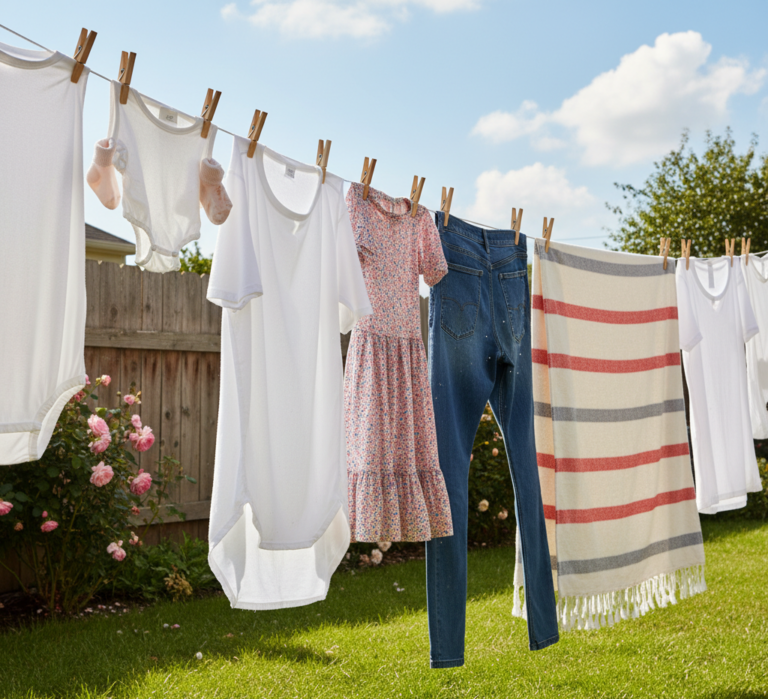
Jeans. Heavy cotton denim tolerates a lot, but dryer heat shrinks the fabric, warps waistbands, and wears seams early, while hot air fades indigo dyes fast. Line drying keeps jeans strong and dark. Expect temporary cardboard stiffness when they dry: with no tumbling, water molecules form rigid hydrogen bonds between cotton fibers as they evaporate. A vigorous shake before hanging helps, and your body heat and movement release the bonds within minutes of wearing them. Avoid hot, direct sun.
Colors and darks. Ultraviolet light is a natural bleach, wonderful on white sheets and towels but damaging to dyes. Hang colored items inside out, or dry the rack in a shaded, ventilated spot, and your blacks stay dark.
Knits Must Dry Flat, Not Hung
Wool, cashmere, cotton, and blended knits need a special technique. A soaked sweater holds enough water weight that gravity will pull it downward on a hanger or line, permanently lengthening sleeves, distorting shoulders, and ruining the fit. After gently pressing out water (never wringing), lay the piece flat on a clean dry towel or mesh rack, reshape the sleeves, cuffs, and hem by hand, and let it dry that way. Flat drying preserves both structure and original size.
Three Categories You Should Never Air Dry
| Item type | Why air drying fails | What to do instead |
|---|---|---|
| Down or feather coats, duvets, pillows | Wet down clumps into dense lumps that stay damp for days, inviting mold, mildew, and a sour smell | Tumble on low heat with clean tennis balls or wool dryer balls to beat the clumps apart and restore loft |
| Terry cloth towels and robes | Line-dried cotton loops lock rigid, leaving scratchy, less absorbent towels | Air dry to roughly 80 percent, then finish 10 to 15 minutes on low with dryer balls to fluff |
| Thick multi-layer garments (canvas jackets, lined workwear, heavy hoodies) | Indoor drying can take days; fabric wet beyond 24 to 48 hours grows mildew and turns musty | Use a dryer when possible, or force air movement with an open window, ceiling fan, or portable fan aimed at the rack |
The mold risk is not just cosmetic. The CDC explains that mold grows wherever moisture persists, including on damp fabric, and mustiness is a sign of fungal growth, not a smell that will air out. A garment that sours on the rack usually needs a full rewash, so Health Canada’s advice on using household chemicals such as laundry products safely pairs well with sensible drying habits.
Indoor Drying Without the Must
- Give every inch of the rack airflow: open a window and run a fan across the garments rather than at the wall behind them.
- Space items apart; overlapping fabric traps humidity between layers.
- Never leave heavy items hanging damp overnight into a second day.
- Wipe the rack between loads so residual moisture does not creep onto fresh laundry.
- If a piece smells sour after drying, wash it again instead of wearing it.
Balance the Dryer and the Line
Air drying is a small lesson in material science. Silk, synthetics, denim, and colors thrive on the line; knits need the flat approach; down, terry cloth, and thick layers genuinely need the tumble. Holding that balance protects your wardrobe, cuts energy use, and keeps every textile in the house at its best.
And while you master the laundry, Toronto Shine Cleaning can master your floors, surfaces, and bathrooms. Our bonded and insured team, backed by a $1,000,000 insurance policy and a $10,000 accidental breakage and surety bond, handles the deep vacuuming, detailed dusting, and surface sanitizing that laundry racks cannot reach. Compare plan bases on our pricing page, check coverage on our locations page, book weekly visits through our regular cleaning page, or call (647) 424-0355 for a drying-rack-free weekend.
Air Drying FAQ
Why do air-dried jeans feel like cardboard? Without tumbling, rigid hydrogen bonds form between cotton fibers as water evaporates. The effect is temporary: your body heat and movement break the bonds within minutes of wear. A hard shake before hanging reduces it.
Can I air dry towels at all? Yes, with a hybrid method. Line dry until they are about 80 percent dry, then run them 10 to 15 minutes on low with dryer balls. You save energy and still get soft, fluffy loops instead of stiff ones.
Why does down need a dryer? Wet down clumps, and the centers of those clumps stay damp for days, which breeds mildew and bacteria that destroy both the smell and the insulation. Tumbling on low with tennis or wool dryer balls physically beats the clumps apart and rebuilds loft.
How long is too long for laundry to air dry? Beyond 24 to 48 hours of staying wet, mildew begins to grow and a sour odor follows. Speed things up with fans, spacing, and fresh air, or move heavy items to a dryer.
Does sun fading affect dark clothes indoors? No, which is exactly why shade drying protects them. Outdoors, hang darks and brights inside out or in shade, since ultraviolet light bleaches dyes even when the fabric is only drying.