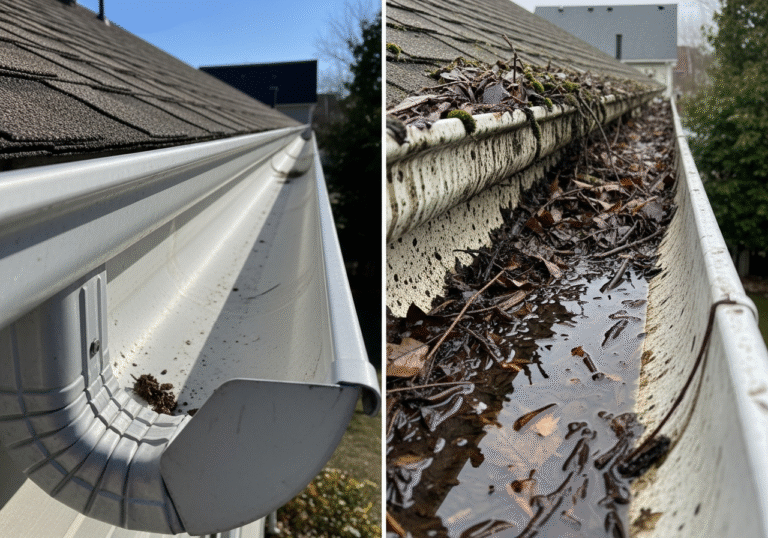










The eavestrough system on a home is a model of elegant, simple engineering, a feature so ubiquitous that it often fades into the architectural background. Its purpose is singular and absolutely critical: to capture the immense volume of water that lands on a roof during a rainstorm and channel it safely away from the house. A typical roof can collect thousands of gallons of water in a single year, and this network of gutters and downspouts is the first and most important line of defense against the relentless force of that water. It is a silent guardian that, when functioning properly, protects everything from the shingles on your roof to the concrete of your foundation. Yet, because of its position high on the roofline and its “out of sight, out of mind” nature, it is one of the most commonly neglected components of home maintenance. This simple oversight is a dangerous gamble, one that can lead to a cascade of problems, turning a simple, preventative task into a series of complex and extremely expensive repairs.
What Happens if it Gets Clogged?
When eavestroughs become clogged, they cease to function. The open channel designed to be a conduit for water transforms into a dam. This blockage is rarely a single event; it is a gradual accumulation of fallen leaves, twigs, pine needles that form dense mats, and the slow but steady shedding of grit from asphalt shingles. Over time, this material compacts into a dense, heavy sludge of decomposing organic matter. When the rain comes, this dam fills quickly, and the water has no choice but to find the path of least resistance. This path is almost always directly over the edge of the gutter, but often it is also backwards, seeping behind the trough and towards the house itself. This is where the first serious damage begins. The board that runs along the roofline, directly behind the eavestrough, is called the fascia. When water constantly overflows or creeps behind the gutter, it saturates this wooden board. This persistent moisture is an open invitation to rot. The wood becomes soft and spongy, losing its structural integrity and its ability to securely hold the spikes or screws that attach the eavestrough system. The sheer weight of the waterlogged debris can cause the gutters to sag, pull away from the house, and eventually collapse. This rot can easily spread to the soffits—the underside of the roof’s overhang—and even to the roof decking itself, creating soft spots that compromise the entire structure and allow water to penetrate the attic. What begins as a collection of leaves can evolve into a significant roofing repair, all because the water had nowhere to go.

Consequences
The consequences of overflowing gutters extend far below the roofline, down to the very base of the home. As water cascades over the edges, it runs directly down the siding and pools in a concentrated area at the foundation. This creates a zone of supersaturated soil directly against the concrete or block walls of your home. Over time, this immense volume of water exerts a relentless hydrostatic pressure on the foundation. In a home with a basement, this pressure can force water through microscopic cracks and pores in the concrete, leading to a host of problems. The first signs are often subtle: a persistent damp, musty odor, or the appearance of efflorescence, a white, chalky residue left behind by evaporating moisture. This can quickly escalate to peeling paint on basement walls, active leaks, and eventually, significant flooding that can ruin carpets, stored possessions, and finished living spaces. Even in a home built on a concrete slab, the damage can be severe. The saturated soil can cause the foundation to shift or heave, leading to significant structural cracks appearing in drywall, interior doors that no longer close properly, and tile floors that buckle and crack. It is a shocking realization that all of this, a direct threat to the stability of your entire home, can originate from a simple clog of leaves a story or two above.

Pests
Beyond these catastrophic risks to the roof and foundation, clogged gutters cause a host of other issues that degrade the value and livability of your home. The constant stream of water pouring down the side of the house will inevitably stain and discolor siding. This results in ugly vertical streaks of green and black from algae and mold that thrive in the persistent moisture, prematurely aging the home’s exterior and diminishing its curb appeal. This overflow can also cause significant damage to your landscaping. Carefully planted flower beds, shrubs, and layers of mulch near the foundation can be completely washed away by the concentrated waterfalls coming off the roof, leading to deep trenches of soil erosion and drowned plants. Furthermore, a clogged eavestrough is an ideal habitat for pests. The stagnant, nutrient-rich water from decomposing leaves is a perfect breeding ground for mosquitos, posing a health risk to your family. The damp, decaying organic matter is an attractive food source and nesting site for insects like carpenter ants and termites, which can then migrate from the fascia board into the very structure of your home. Wasps and hornets often build their nests in the protected corners of clogged gutters, making the area unsafe. Rodents, birds, and even snakes can make a home in the protected, debris-filled channel, bringing them into dangerously close proximity to your attic and providing them an easy entry point into your living space.

In The Cold
In colder climates, the danger takes on a new and particularly destructive form during the winter: ice dams. The phenomenon begins when heat loss from your home’s attic warms the underside of the roof, melting the snow on its surface. This meltwater runs down the roof until it reaches the cold edge, or eave, where it refreezes. When an eavestrough is clogged with frozen debris, this process is supercharged. The blockage acts as a foundation, allowing a solid dam of ice to build up along the entire roofline. As more snow melts, the water pools behind this dam with nowhere to go. It is forced backwards, up under the shingles of your roof. This is where the destructive cycle begins. The trapped water refreezes at night, expanding and lifting the shingles, and then thaws during the day, seeping through the newly created gaps into the sheathing and insulation below. Ice dams are uniquely destructive, causing immense interior water damage that is often not discovered until it appears as brown, circular stains on your ceiling or water running down your interior walls. This can lead to soggy, compressed insulation that loses its effectiveness and becomes a breeding ground for dangerous black mold.
Protective Equipment
The process of cleaning an eavestrough system is straightforward in theory but can be difficult and dangerous in practice. It involves working at height on a ladder, a task that carries inherent risks of serious falls. Proper safety protocols, like ensuring the ladder is on stable, level ground and maintaining three points of contact at all times, are non-negotiable. The job requires carefully scooping out all the packed-in debris by hand into a bucket, wearing thick gloves to protect against sharp objects and bacteria. Once the solid material is removed, the entire system, including the downspouts, must be flushed with a garden hose. This final step is crucial, as it is the only way to confirm that there are no hidden blockages deep within the downspouts, often at the elbows, that would render the cleaning useless. If water flows freely from the bottom of the downspout, the system is clear. This necessary task should be performed, at a minimum, twice a year: once in the late spring to clear out pollen, seeds, and blossoms, and once in the late fall after all the leaves have dropped from the surrounding trees.

Regular eavestrough maintenance is not an aesthetic choice; it is a fundamental act of home preservation. It is a small, preventative measure that protects against a host of major, costly structural problems. By ensuring that water can flow freely and be directed away from your home as intended, you safeguard the health of your roof, the stability of your foundation, and the integrity of your home’s exterior, preserving its value and safety for years to come.
Protecting your home from water damage starts with the roof. Clogged gutters can lead to serious problems, from roof rot and foundation damage to pest infestations. Toronto Shine Cleaning offers professional interior cleaning services, ensuring your home is always in good condition and a pleasant place to live.