Cleaning Products

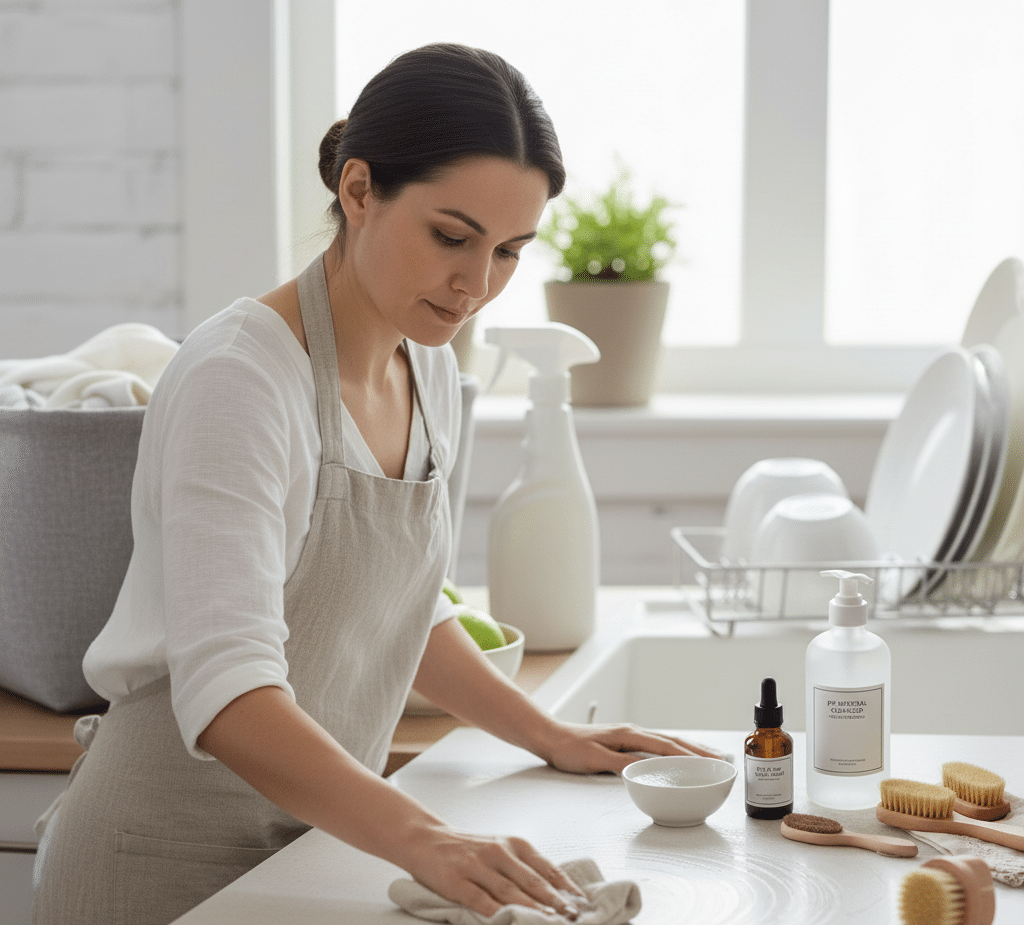
Woman cleaning the counter with pH-neutral products next to her.

Understanding pH-Neutral Cleaners: The Complete Guide

In the world of cleaning products, there is soap with a neutral pH. Its name may sound technical, something best left to a chemistry lab, but the principle behind it is the single most important concept for anyone looking to clean their home effectively while preserving its surfaces. Understanding the power of a balanced pH is the key to moving from a cycle of aggressive cleaning and potential damage to a routine of gentle, sustainable maintenance that protects your investment and keeps your home looking its best for years to come. pH Scale To grasp the importance of a pH-neutral cleaner, one must first understand the pH scale itself. It is a simple spectrum that measures the acidity or alkalinity of a water-based solution, ranging from 0 to 14. A pH of 7, the very middle of the scale, is considered neutral. Pure water is the perfect example of a neutral substance. Anything below 7 is acidic, with common household examples being vinegar and lemon juice. Anything above 7 is alkaline (or basic), a category that includes powerful cleaners like bleach, ammonia, and many oven degreasers. The further a substance is from the neutral 7, the more chemically reactive and potentially caustic it becomes. This reactivity is precisely what makes strong acidic or alkaline cleaners effective at certain tasks, like dissolving hard water stains or cutting through heavy grease, but it is also what makes them incredibly dangerous to a wide variety of common household surfaces. A pH-neutral soap is a cleaning agent, or surfactant, that has been carefully formulated to have a pH level at or very near 7. It is designed to perform its primary function—lifting and suspending dirt, oils, and grime so they can be wiped away, without being chemically aggressive. It does not seek to dissolve, etch, or strip the surface it is cleaning. Instead, it works on a mechanical level, breaking the bond between the soil and the surface. This gentle nature is its greatest strength. It is the “do no harm” principle of the cleaning world, a safe and reliable option for routine cleaning on materials that would be irreversibly damaged by the harshness of a cleaner at either extreme of the pH scale. Natural Stones Perhaps the most critical application for pH-neutral soap is in the care of natural stone surfaces. Marble, limestone, travertine, and onyx are stunningly beautiful materials that lend an air of luxury and permanence to a home. They are also incredibly vulnerable. These stones are primarily composed of calcium carbonate, a mineral that has a violent reaction with acid. When an acidic cleaner—even a seemingly harmless, “natural” one like vinegar—is used on a marble countertop or floor, it initiates a chemical reaction that literally dissolves a microscopic layer of the stone. This process is called etching, and it leaves a dull, whitish mark that looks like a stain but is, in fact, physical damage to the stone’s surface. It cannot be wiped away; it must be professionally re-honed and polished to be removed. An alkaline cleaner, while less immediately dramatic, can also dull the stone’s finish and seep into its porous structure over time. A pH-neutral cleaner is the only recommended product for the routine cleaning of these calcium-based stones, as it removes daily grime without altering the stone’s delicate chemical makeup, preserving its natural luster and integrity. Even for more durable stones like granite, which is less susceptible to etching, long-term use of harsh chemicals can degrade the sealant that protects it from staining, making a pH-neutral soap the wisest choice for daily maintenance. This principle of preservation extends directly to flooring, particularly sealed hardwood and modern luxury vinyl tile (LVT). A sealed hardwood floor is protected not by the wood itself, but by the layers of polyurethane or other sealant applied on top of it. This finish is what gives the floor its shine and protects the wood from moisture and scratches. While it is a durable layer, it is not impervious. Aggressive, high-alkaline cleaners can, over time, chemically strip away this protective finish. The floor may look clean at first, but with each cleaning, the finish becomes duller and thinner, leaving the wood itself more vulnerable to damage. A pH-neutral floor cleaner, properly diluted, will lift dirt from the surface of the polyurethane without harming it, prolonging the life of the floor’s finish and keeping it looking vibrant. The same logic applies to LVT and laminate flooring. These products have a factory-applied top wear layer that protects the printed design beneath. The manufacturers of these floors almost universally recommend only pH-neutral cleaners, as harsh chemicals can cause the wear layer to become cloudy or brittle, permanently marring the floor’s appearance and often voiding its warranty. Delicate Materials The gentle touch of a pH-neutral soap is also invaluable when caring for more delicate materials like leather upholstery and certain textiles. Leather is a natural skin that contains oils to keep it supple and prevent it from cracking. Cleaners with a high alkaline content can strip these essential oils, leading to dryness, brittleness, and a faded appearance. A pH-neutral leather cleaner, by contrast, removes surface dirt without disrupting the material’s natural balance. When spot-cleaning upholstery or even delicate clothing, a pH-neutral solution is the safest starting point. It is far less likely to cause discoloration or damage to the fibers than a more chemically reactive product. It embodies the professional approach: always start with the least aggressive method possible. However, it is equally important to understand the limitations of pH-neutral soaps. Their gentle nature means they are not the right tool for every single cleaning challenge. They are masters of maintenance, not miracle workers for extreme situations. For example, in a bathroom plagued by hard water stains and soap scum, a pH-neutral cleaner will struggle. Soap scum is a combination of soap residue and mineral deposits (calcium and magnesium), which are alkaline. To dissolve them effectively, an acidic cleaner is required to break down the mineral bonds.

Understanding pH-Neutral Cleaners: The Complete Guide Read More »

6 Reasons Why Dry Cleaning is The Safest Option For Your Most Important Clothes

The term “dry cleaning” is one of the more misleading phrases in common use, as the process is neither dry nor, strictly speaking, just cleaning. It is a complex and highly specialized method of garment care that involves sophisticated machinery, a deep understanding of fabric science, and the precise application of chemical solvents. The core principle that separates dry cleaning from traditional laundering is the absence of water. Instead of H2O, garments are submerged in and cleaned with a liquid solvent that is specifically chosen for its ability to dissolve oils and greases without damaging delicate, water-sensitive fibers like silk, wool, rayon, or intricately constructed pieces like tailored suits and formal gowns. Water can cause these natural fibers to shrink, distort, or lose their color, but a solvent can lift away stains and soil while leaving the garment’s structure and feel intact. The entire journey of a garment through a dry cleaning facility is a multi-step procedure that combines skilled human touch with advanced technology. 1.Diagnostic The process begins the moment a customer brings a garment to the counter. This initial interaction is a crucial diagnostic step. The customer might point out specific stains, and a knowledgeable cleaner will inquire about the source of the stain, as this information dictates the treatment. Following this, the garment undergoes its first inspection. A trained professional examines it meticulously, not just for the stains pointed out by the customer, but for any others that may be less obvious. They also check the integrity of the garment, noting any loose buttons, open seams, or pre-existing damage. This is also when the care label is read and assessed. The care label is a legal directive from the manufacturer, and the cleaner must adhere to its instructions. Finally, each garment is tagged. This is a critical organizational step. A small, numbered tag or a barcode is affixed to an inconspicuous seam, ensuring that the piece can be tracked throughout the entire process and correctly reassembled with its owner’s order at the end. 2.Stain Removal Before the main cleaning cycle can begin, the garment moves to what is arguably the most artful and skill-intensive stage of the process: pre-treatment, also known as “spotting.” This is where a specialist, the spotter, addresses individual stains. Working at a specialized station called a spotting board, which provides steam, vacuum, and a variety of chemical agents, the spotter acts as a fabric chemist. They must identify both the type of fabric and the nature of the stain to select the correct chemical agent and technique. Stains are broadly categorized; for example, oil-based stains like grease or salad dressing require different solvents than protein-based stains like blood or egg, or tannin-based stains like wine, coffee, or juice. The spotter uses a “steam gun” to apply steam and heat to help loosen the stain, and various chemical solutions are carefully applied, tamped with a small brush, and then flushed out with more steam. A vacuum pedal on the spotting board suctions away the loosened stain and excess moisture, preventing a ring from forming on the fabric. This targeted treatment is essential because the general cleaning cycle might not be sufficient to remove stubborn, set-in stains. 3.Dry Clean Once pre-treated, the garments are ready for the main event: the cleaning machine itself. A modern dry cleaning machine looks very much like an oversized front-loading washing machine, but its internal workings are far more complex. It is a sealed, self-contained system that performs the washing, rinsing, and drying cycles all in one unit. Garments are sorted by color, weight, and fabric type and then loaded into the machine’s drum. The door is sealed, and the machine begins its cycle by filling the drum with the chosen solvent. Historically, the most common solvent was perchlorethylene, or “perc,” a powerful and effective degreaser. However, due to environmental and health concerns, the industry has increasingly shifted towards more eco-friendly alternatives like hydrocarbon solvents, liquid silicone, or even pressurized liquid carbon dioxide. As the drum tumbles the clothes gently, the solvent circulates through the fabric, lifting away body oils, grime, and the loosened stains from the pre-treatment stage. This “wash” cycle is typically much gentler than a water-based wash to protect the delicate garments. After the wash cycle, the machine drains the used solvent and begins an extraction cycle, spinning at high speed to remove the majority of the solvent from the clothes, much like a washing machine’s spin cycle removes water. The used solvent is not discarded; it is pumped through a series of filters to remove the collected dirt and impurities and is then distilled. This purification and recycling process is a key feature of the closed-loop system, allowing the expensive solvent to be reused for many cycles, which is both economically and environmentally necessary. 4.Drying Following the extraction, the machine enters the drying phase. A current of warm air is gently tumbled through the clothes to evaporate any remaining solvent from the fabric. This is not the high heat of a conventional dryer. The temperature is carefully controlled to be just high enough to turn the liquid solvent into a vapor without damaging the clothes. This solvent-laden warm air is then drawn out of the drum and passed over cooling coils. As the air cools, the solvent vapor condenses back into its pure liquid form, is collected, and returned to the main solvent tank for reuse. This vapor recovery system is incredibly efficient, recapturing nearly all of the solvent so that very little escapes into the atmosphere. Once the cycle is complete and the sensors detect no remaining solvent fumes, the machine’s door unlocks, and the garments emerge clean, completely dry, and with only a faint, sterile scent that quickly dissipates. 5.Finishes The journey is not over yet. The clean garments are immediately inspected again. Any stains that were not fully removed during the process are noted. These stubborn spots may require “post-spotting,” where the spotter applies more specialized techniques to the now-clean fabric. Once

6 Reasons Why Dry Cleaning is The Safest Option For Your Most Important Clothes Read More »

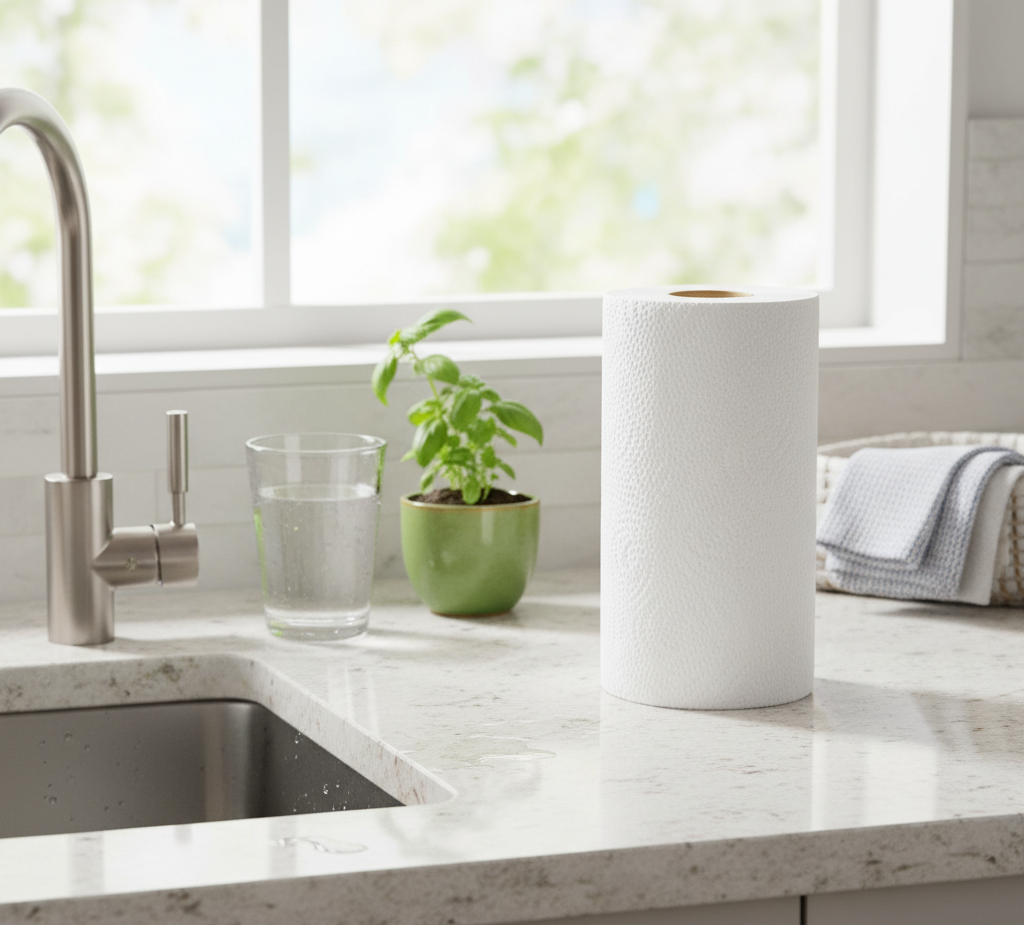
paper towels on a kitchen counter

The Right and Wrong Way to Use Paper Towels for Cleaning – 6 Best Tips

The paper towel is a cornerstone of modern household cleaning, a simple tool so deeply integrated into our daily routines that its presence is often taken for granted. Its immediate accessibility and disposability make it the first thing we reach for when faced with a sudden spill on the kitchen counter, a smudge on a window, or a greasy stovetop. This convenience is its primary virtue. There is no need to search for a clean cloth, no worry about laundering a soiled rag, and no hesitation in using it on the most unpleasant messes before tossing it away. The single-use nature of the paper towel provides a psychological and practical clean slate for every task, a guarantee that you are not spreading yesterday’s germs around today’s surfaces. 1.Absorbs and Retains Liquids The effectiveness of a paper towel is rooted in its design. Constructed from absorbent cellulose fibers, often derived from wood pulp, its purpose is to wick up and hold liquid. The texture, thickness, and quilting patterns of different brands are all engineered to maximize this absorbency and improve scrubbing strength. For liquid spills, the proper technique is to blot, not wipe. Placing a paper towel over a spill allows the capillary action of the fibers to draw the liquid up and away from the surface, containing the mess. An aggressive wiping motion, by contrast, can spread the liquid over a wider area and push it deeper into porous surfaces like wood or grout, making the stain more difficult to remove. For larger spills, layering several sheets increases the absorptive capacity and provides a thicker barrier between your hand and the mess. 2.Window Cleaner Beyond spills, the paper towel serves as an excellent vehicle for applying cleaning solutions. When sprayed with a glass cleaner, it becomes the perfect tool for achieving a streak-free shine on windows, mirrors, and other glass surfaces. Its disposable nature is an advantage here; unlike a reusable cloth that might have residual oils or fabric softener from a previous wash, a fresh paper towel is free of contaminants that could cause streaking. For disinfecting surfaces like kitchen counters or bathroom sinks, a paper towel sprayed with an appropriate disinfectant ensures that the cleaning agent is applied evenly and that germs from one area are not transferred to another. After wiping down the surface, the towel and the germs it has collected are discarded, effectively removing them from the home. This stands in stark contrast to a sponge or cloth, which, if not properly and frequently sanitized, can become a breeding ground for bacteria and contribute to cross-contamination. 3.Fat And Oil The paper towel’s utility in dealing with grease and oil is particularly notable. In the kitchen, it is indispensable for wiping down greasy stovetops, cleaning the inside of a microwave after a food splatter, or absorbing excess oil from fried foods. The fibers readily trap the grease, lifting it from the surface. A task like this would ruin a reusable cloth, leaving it with a greasy residue that is difficult to wash out and can be transferred to other items in the laundry. For particularly heavy grease, using a dry paper towel first to absorb the bulk of the oil before following up with a cleaning solution is a highly effective two-step process. This method prevents the grease from simply being smeared around and makes the final cleaning much easier. 4.Disadvantages However, the very qualities that make the paper towel so convenient, its disposability and single-use design, —are also the source of its most significant drawbacks. The environmental impact of paper towel consumption is considerable. The production process requires a vast amount of resources, including trees for pulp and water and energy for manufacturing. After a few seconds of use, these resources are consigned to a landfill, where they contribute to the growing problem of waste. For the environmentally conscious household, the constant cycle of consumption and disposal presents a significant conflict. Furthermore, the recurring cost of purchasing paper towels can add up to a substantial expense over time, far exceeding the one-time cost of reusable alternatives. Performance limitations also become apparent in certain cleaning scenarios. While excellent for absorption and light wiping, the standard paper towel lacks the durability required for heavy-duty scrubbing. When faced with dried-on food, tough grime, or textured surfaces, a paper towel can shred and fall apart, leaving behind lint and pulp residue that creates a new mess to be cleaned. This lint can be especially problematic on dark surfaces or on screens, where it is highly visible. For tasks that require abrasion to lift a stubborn spot, a paper towel is simply not the right tool. It cannot provide the friction and resilience of a scrub brush or even a well-made reusable cloth. 5.Alternatives This is where the conversation shifts to alternatives, chief among them the microfiber cloth. Microfiber technology represents a significant advancement in cleaning science. These cloths are made from extremely fine synthetic fibers, often a blend of polyester and polyamide. The fibers are split during the manufacturing process, creating a vast surface area and a positive electrostatic charge that actively attracts and traps dust, dirt, and microbes. When used dry, a microfiber cloth is an exceptional duster, capturing particles rather than just pushing them around. When used damp, the capillary action of the fine fibers allows it to absorb a remarkable amount of water and lift grime with minimal effort. Unlike paper towels, microfiber cloths are highly durable and can be washed and reused hundreds of times, making them a far more sustainable and cost-effective choice in the long run. They are also more effective for a wider range of cleaning tasks. They can scrub without falling apart, polish surfaces to a streak-free shine without leaving lint, and deep clean with just water, reducing the need for chemical cleaners. The key to maintaining their effectiveness is proper care: they should be washed separately from other laundry, without fabric softener, which can clog the fibers and reduce

The Right and Wrong Way to Use Paper Towels for Cleaning – 6 Best Tips Read More »

Sofa Cleaning: From Simple Vacuuming to Deep Stain Removal

A clean sofa is fundamental to a clean home. Over time, this central piece of furniture accumulates dust, allergens, food crumbs, and body oils, which can degrade the fabric and impact the indoor air quality of your living space. Regular cleaning not only preserves the appearance of your sofa but also extends its lifespan and contributes to a healthier environment for you and your family. Before beginning any cleaning process, it is essential to identify the material of your sofa and understand the manufacturer’s cleaning instructions. Most sofas have a care tag, typically found under the cushions, with a cleaning code. The code ‘W’ means it is safe to use water-based cleaners. ‘S’ indicates that only a solvent-based, water-free cleaner should be used. ‘WS’ or ‘SW’ signifies that you can use either water-based or solvent-based cleaners. An ‘X’ code means the fabric should only be cleaned by vacuuming; no water or solvents should be applied. Adhering to these codes is crucial to prevent irreversible damage like discoloration or shrinkage. If you cannot find a tag, it is always best to perform a spot test with your chosen cleaning solution on a small, inconspicuous area of the sofa first. 1.Aspiration The first step in any sofa cleaning routine is a thorough vacuuming. This initial action removes all loose dirt, dust, pet hair, and other debris from the surface and crevices of the furniture. Using a vacuum cleaner with an upholstery attachment and a crevice tool will yield the best results. It is important to remove all cushions and vacuum the base of the sofa, paying close attention to the seams and corners where debris tends to gather. For fabric sofas, a stiff brush can be used beforehand to loosen any dried-on dirt or hair, making the vacuuming process more effective. This step is not just a precursor to deep cleaning; regular weekly vacuuming is a key maintenance practice that prevents the buildup of abrasive dirt particles that can wear down fabric fibers over time. 2.Natural Mixtures For a general deep clean of a fabric sofa with a ‘W’ or ‘WS’ code, you can create a simple and effective cleaning solution at home. A common mixture involves a small amount of mild dish soap combined with warm water. Another popular natural cleaner can be made by mixing equal parts of white vinegar and water. Before applying any solution to the entire sofa, test it on a hidden spot to ensure it doesn’t cause any discoloration. Apply the solution sparingly with a microfiber cloth, gently blotting or scrubbing stained areas with a soft-bristled brush. It is important not to oversaturate the fabric, as excessive moisture can lead to water damage, mildew growth, or leave water marks, especially on certain materials. After cleaning, use a clean, damp cloth to wipe away any soap residue. 3.Baking Soda Baking soda is another powerful tool for cleaning and deodorizing fabric upholstery. You can sprinkle a generous layer of baking soda over the entire sofa, letting it sit for at least 20 to 30 minutes, or even for a few hours, to absorb odors and help lift dirt. After it has had time to work, vacuum it up thoroughly using a brush attachment. For tougher stains, a paste can be made by mixing baking soda with a small amount of water. Apply this paste to the stain, let it sit for about 15 to 30 minutes, and then gently wipe it away with a damp cloth before blotting the area dry. 4.Steam Cleaning Steam cleaning, also known as hot water extraction, is a highly effective deep cleaning method for many types of fabric sofas. A steam cleaner injects hot water and a cleaning solution into the upholstery to dislodge dirt, dust mites, and allergens, and then immediately extracts the dirty water with a powerful vacuum. This method provides a deep sanitization that can be particularly beneficial for households with allergy sufferers, children, or pets. While you can rent or purchase a steam cleaner for home use, it’s vital to use it correctly to avoid over-wetting the fabric. Professional services often use more powerful equipment that extracts a higher percentage of the moisture, leading to faster drying times and reducing the risk of mold or mildew. Always check your sofa’s cleaning code before using a steam cleaner, and start with the lowest heat setting. 5.Act Quickly Addressing spills and stains promptly is the most effective way to prevent them from becoming permanent. The golden rule is to blot, never rub. Rubbing a fresh spill can push the substance deeper into the fabric fibers and spread the stain. Use a clean, dry cloth or paper towel to gently absorb as much of the liquid as possible. For specific types of stains, different solutions may be required. A mixture of white vinegar and water can be effective against water stains. For grease stains, start by sprinkling cornstarch or baking soda on the spot to absorb the oil; let it sit for about 30 minutes before vacuuming it away. For tougher stains like wine or ink, you may need a commercial upholstery stain remover or a specific DIY solution. A paste of baking soda and water, or a mix of hydrogen peroxide and dish soap, can be effective on some stubborn stains, but always test these solutions on a hidden area first. 6.Attention The cleaning process varies significantly for different upholstery materials. Leather sofas, for instance, should not be cleaned with water-based solutions unless specified by the manufacturer. Typically, they require a wipe-down with a microfiber cloth dampened with a specialized leather cleaner or a mild soap and water solution. After cleaning, it’s often recommended to apply a leather conditioner to restore moisture and prevent the material from drying out and cracking. Suede and other delicate materials like velvet require a more careful approach. A suede brush should be used to gently brush away surface dirt in the direction of the nap. For stains on suede, a solution of equal parts white vinegar and water can be blotted on gently.

Sofa Cleaning: From Simple Vacuuming to Deep Stain Removal Read More »

Uses for Coarse Salt

Coarse Salt: 10 Surprising Uses for Coarse Salt in Home Cleaning

In the search for effective and non-toxic cleaning solutions, one of the most powerful tools is often already sitting in the kitchen pantry. Coarse salt, whether it is kosher salt, sea salt, or rock salt, is a remarkably versatile and inexpensive mineral with properties that extend far beyond flavoring food. Its utility as a cleaning agent is rooted in its fundamental physical and chemical characteristics. The crystalline structure of salt makes it an excellent natural abrasive, capable of scouring away grime without being as harsh as many commercial powders. Furthermore, salt is a desiccant, meaning it absorbs water and, by extension, moisture-laden messes. It also has mild antibacterial and deodorizing properties, making it a multi-functional powerhouse for a wide range of household chores. 1.Cast Iron Pans Perhaps the most classic and celebrated use for coarse salt in cleaning is on cast iron cookware. Maintaining the seasoned surface of a cast iron skillet is crucial; harsh soaps and detergents can strip away this protective, non-stick layer that has been built up over time. Salt provides the perfect solution. To clean a warm skillet after cooking, simply pour a generous amount of coarse salt into the pan. Using a folded paper towel or a stiff brush, scrub the salt around the pan. The salt’s abrasive texture will lift away stuck-on food particles and absorb any excess oil without damaging the seasoning. Once the pan is clean, the dirty salt can be discarded, and the pan can be wiped clean with a cloth. A thin layer of oil can then be applied to reinforce the seasoning, leaving the skillet ready for its next use. This method not only cleans but also helps to manage rust spots that may begin to form. 2.Kitchen Utensils This same abrasive quality makes coarse salt an exceptional cleaner for other kitchen items, particularly wooden cutting boards and butcher blocks. These surfaces, being porous, can harbor bacteria and absorb odors from foods like garlic and onion. To deep clean and deodorize a wooden board, sprinkle it liberally with coarse salt. Then, take half a lemon and use it as a scrubber, squeezing slightly as you work the salt into the wood in a circular motion. The salt acts as a scouring agent to lift away fine particles of food and stains, while the citric acid in the lemon juice acts as a natural disinfectant and bleach, brightening the wood and neutralizing odors. Let this salty, lemony paste sit on the board for ten to fifteen minutes before scraping it off and rinsing the board thoroughly with hot water. This process leaves the cutting board sanitized, deodorized, and visually refreshed. 3.Fat Removal Coarse salt is also highly effective at tackling grease. For greasy pots, pans, or baking dishes, sprinkling salt onto the greasy areas can make cleanup significantly easier. The salt absorbs a good portion of the grease, so when you wipe it out with a paper towel, you remove a large amount of the mess before even introducing soap and water. This pre-cleaning step can reduce the amount of grease going down your drain and make the final wash much quicker. This principle also applies to grease spills on fabric. If you get an oily splatter on your clothing or a tablecloth, immediately cover the spot with a pile of coarse salt. Let it sit for an hour or so to draw the oil out of the fibers. Afterwards, brush off the salt and treat any remaining stain before laundering as usual. 4.Red Wine Stain removal is another area where salt’s properties shine. For the dreaded red wine spill on a carpet or upholstery, salt can be a first line of defense. After blotting the spill with a clean cloth to absorb as much liquid as possible, cover the entire stain with a thick layer of coarse salt. The salt will begin to draw the wine out of the fibers, and you may see it turn pink as it works. Leave the salt to dry completely, which may take several hours or even overnight. Once it is dry and caked, you can simply vacuum it all up. While it may not remove a very old or heavily set-in stain completely, it is incredibly effective on fresh spills and can significantly reduce the severity of the stain. 5.Cleaning Inside the kitchen, coarse salt can be used to clean and deodorize in less obvious ways. The inside of a coffee pot or a thermos can develop brown stains from coffee and tea tannins that are difficult to scrub. To remove these, fill the carafe with a handful of coarse salt and about a cup of crushed ice. Swirl the mixture vigorously for a few minutes. The ice provides a hard medium that forces the abrasive salt crystals against the interior walls of the carafe, effectively scouring away the stains. For particularly stubborn stains, adding a bit of lemon juice or vinegar to the mix can provide an acidic boost to the cleaning power. After swirling, let the mixture sit for about half an hour, then rinse thoroughly. This method is a safe and effective way to restore clarity to a glass coffee pot without using harsh chemicals. 6.Deodorizing The power of salt extends to cleaning drains and garbage disposals. To freshen a smelly kitchen drain, pour about half a cup of coarse salt down the drain, followed by a quart of very hot water. The salt helps to dislodge grease and food particles that can get trapped and cause odors. For a garbage disposal, the combination of ice and salt works wonders. Pour a cup of salt and a couple of cups of ice cubes into the disposal and run it until the grinding sound stops. The ice and salt work together to freeze and scour away built-up grime and sludge from the blades and the walls of the disposal, sharpening the blades in the process. Following this with a few lemon or orange peels will leave the disposal and

Coarse Salt: 10 Surprising Uses for Coarse Salt in Home Cleaning Read More »

Understanding Acetone: A Guide to the Powerful Cleaning Solvent

Acetone is a remarkably potent organic solvent, a chemical powerhouse whose utility in cleaning is matched only by the caution required for its use. Its effectiveness is rooted in its molecular structure; as a polar aprotic solvent, it has the unique ability to dissolve a vast array of substances that are resistant to water and other common cleaners. This includes non-polar materials like oils and greases, as well as polar substances. This dual-action capability is why it can tackle such a diverse range of problems, from varnish and lacquer to permanent ink and stubborn adhesives. Its high volatility, meaning it evaporates very quickly, is often considered an asset, as it can perform its function and then disappear, frequently leaving behind a clean, dry, and residue-free surface. However, this same strength means it is indiscriminately aggressive, making a thorough understanding of its properties essential before it is ever brought near a surface. Paint Remover One of its most celebrated roles is as a paint and finish remover. When dealing with dried latex or oil-based paint splatters on hard, non-porous surfaces like glass, tile, or bare metal, acetone works by breaking down the polymer binders that give the paint its structure. By dissolving these binders, it effectively liquefies the paint, allowing it to be wiped away. This is also why it is the go-to solvent for cleaning paint brushes, rollers, and spray gun components that have been used with lacquers or enamels, restoring them to a usable state when other thinners might fail. It can strip varnish and polyurethane from metal hardware or remove old, yellowed lacquer from brass fixtures, revealing the untarnished metal beneath. The process requires patience, applying the acetone, allowing it time to work on the coating, and then carefully scraping or wiping away the softened layers. Beyond paint, acetone excels at vanquishing adhesives. It is the active ingredient in most nail polish removers, effortlessly dissolving the tough acrylic polymers in nail lacquer. This same principle applies to more challenging adhesives like cyanoacrylate, commonly known as super glue. A small, careful application can break the bond of cured super glue on skin or countertops. It is also highly effective for removing the stubborn, gummy residue left behind by stickers, labels, and various types of tape. The acetone penetrates the adhesive mass, reducing its viscosity and tackiness until it can be easily wiped clean. For more substantial challenges, like removing contact cement or construction adhesives, acetone can soften the material, though it may require multiple applications and significant mechanical action to fully remove the buildup. Degreaser The solvent’s power is also invaluable for degreasing and deep cleaning in mechanical or workshop environments. When preparing a metal part for welding, painting, or powder-coating, any trace of oil, grease, or wax can compromise the integrity of the final bond or finish. Acetone cuts through these petroleum-based contaminants with ease, flashing off quickly to leave a perfectly clean substrate ready for the next step. It is used to clean automotive parts, machinery, and tools, dissolving grime and tar that would otherwise require harsh mechanical scrubbing. On a concrete garage floor, it can be used to lift deep-set oil stains, though it may drive the stain deeper if not used correctly with an absorbent material to pull the dissolved oil out of the porous concrete. It Can Cause Damage Despite this wide range of applications, the list of materials that acetone can damage is extensive and requires serious consideration. Its most dramatic effect is on plastics. It is a powerful solvent for many common polymers, including polystyrene (styrofoam), ABS (used in many electronics housings and car interiors), acrylic (Plexiglas), and polycarbonate. Contact will cause these materials to soften, warp, cloud over, or completely dissolve into a sticky mass. This is why it is critical to test acetone on an unseen area of any plastic item before use. Even brief contact can cause irreversible damage known as solvent crazing, creating a network of fine cracks in the plastic’s surface. Conversely, it is generally safe on high-density polyethylene (HDPE) and polypropylene, which is why acetone containers are often made from these materials. Finished wood surfaces are also highly vulnerable. Acetone will strip almost any finish, from shellac and varnish to lacquer and polyurethane, ruining the protective layer and exposing the raw wood. This action can be so aggressive that it also dehydrates the wood fibers themselves, potentially causing them to become brittle. It can lift wood veneers and damage laminates. For these reasons, acetone should never be used to clean wooden furniture, flooring, or cabinetry unless the specific goal is to completely strip the existing finish for a refinishing project. The danger extends to fabrics as well. Acetone will dissolve fabrics made from acetate, triacetate, and modacrylic fibers, literally creating holes in the material. While it is generally considered safe for natural fibers like cotton, wool, and silk, it can strip the color from dyed textiles. A spot test in an inconspicuous area, such as an inner seam, is absolutely mandatory before attempting to use it for stain removal on any fabric or carpet. Be careful Given its potent nature, safety protocols are non-negotiable. Acetone is extremely flammable, with a very low flash point, meaning its vapors can ignite at room temperature from a distant spark or flame. Ignition sources can be obvious, like a pilot light on a water heater, or subtle, like the spark from a refrigerator motor kicking on or a discharge of static electricity. Therefore, its use requires robust ventilation, such as opening windows and doors and using a fan to create a cross-breeze that directs fumes outside. Working outdoors is always the safest option when possible. Personal protective equipment is essential. Chemical-resistant gloves, specifically those made of butyl rubber or nitrile, are necessary to protect the skin. Latex gloves are not sufficient as acetone can degrade them quickly. Direct skin contact can cause defatting, leading to severe dryness, irritation, and cracking. Splash-proof safety goggles are also a must to protect

Understanding Acetone: A Guide to the Powerful Cleaning Solvent Read More »

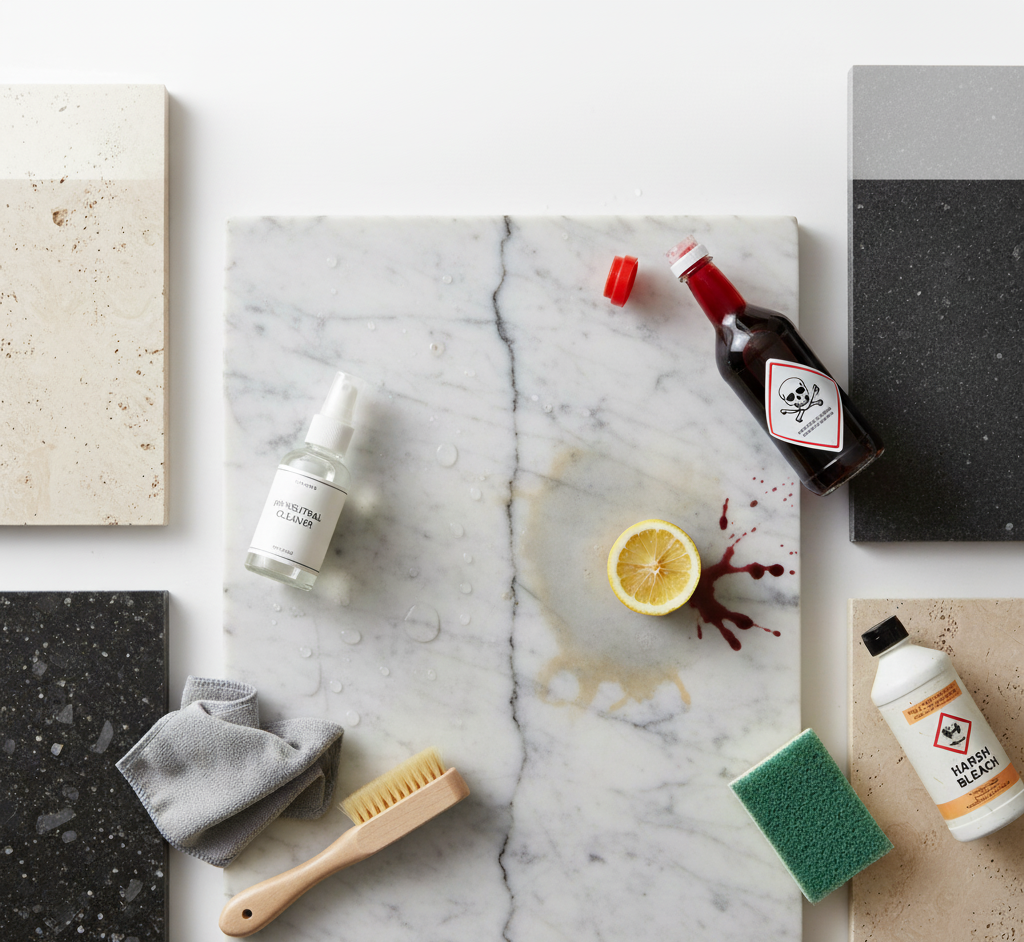
Cleaning Products for Your Natural Stone

Natural Stone: Choosing the Right Cleaning Products for Your Natural Stone

Natural stone surfaces bring an unparalleled elegance and timeless durability to any space. However, their porous nature demands a mindful approach to cleaning and maintenance. Using the wrong products can lead to irreversible damage, such as dulling, etching, and staining. Understanding the specific needs of your stone, whether it be granite, marble, travertine, or limestone, is paramount to preserving its beauty for years to come. The cornerstone of proper natural stone care is the consistent use of pH-neutral cleaners. Harsh, acidic, or alkaline chemicals can react with the minerals in the stone, compromising its integrity and finish. Simple Mixture For daily cleaning of all-natural stone surfaces, the most recommended and safest solution is a simple mixture of warm water and a few drops of mild, pH-neutral dish soap. This gentle combination is effective at removing everyday dirt, grease, and grime without harming the stone or its sealer. After wiping the surface with this solution using a soft, microfiber cloth, it is crucial to rinse the area thoroughly with clean water and dry it completely with another soft cloth. This prevents soap scum buildup, which can leave a dull film on the surface over time, and averts water spots. When a more potent cleaning is required, particularly for disinfection, a solution of equal parts water and 70% isopropyl alcohol can be used. This mixture is effective at killing bacteria and germs without being abrasive or acidic. Spray the solution onto the surface, let it sit for a few minutes, and then wipe it clean with a damp cloth before drying thoroughly. This is an excellent option for kitchen countertops where food preparation occurs. It is imperative to know which products to avoid. Acidic substances are the primary adversary of natural stone, especially calcareous stones like marble, travertine, and limestone. These stones are primarily composed of calcium carbonate, which reacts vigorously with acids, leading to etching, a chemical burn that appears as a dull spot on the surface. Common household cleaners that contain vinegar, lemon juice, or other citrus-based ingredients should never be used on these stones. Likewise, harsh chemicals such as bleach and ammonia can degrade the sealer and dull the stone’s surface over time. Abrasive powders or creams are also to be avoided as they can scratch the stone. Granite Granite, being a siliceous stone, is generally more resistant to acids than its calcareous counterparts. However, repeated exposure to acidic substances can still weaken the sealer and eventually lead to damage. Therefore, it is best to adhere to pH-neutral cleaning practices for granite as well, ensuring its longevity and lustrous appearance. Marble is particularly susceptible to damage due to its soft and porous nature. Spills, especially from acidic liquids like wine, coffee, or fruit juice, should be blotted up immediately with a soft cloth. Wiping the spill can spread it further. After blotting, clean the area with a mild soap and water solution, rinse, and dry. For tougher organic stains on light-colored marble, a poultice made from hydrogen peroxide and an absorbent material like baking soda can be effective. Travertine Travertine and limestone share a similar composition to marble and thus require comparable care. Their surfaces are often characterized by small pits and fissures, which can trap dirt. Regular dusting with a dry microfiber cloth is beneficial to prevent the accumulation of abrasive particles. When cleaning, use a pH-neutral cleaner and ensure the surface is rinsed and dried thoroughly to prevent water from settling in the pores. For deep cleaning textured travertine, an alkaline-based cleaner may be necessary to lift embedded grime. In cases of efflorescence, a white, powdery deposit that can appear on the surface, it is crucial to use a non-acidic cleaner to remove the salt residue without harming the stone. Beyond daily cleaning, the most critical aspect of natural stone care is sealing. A sealer acts as a protective barrier, penetrating the pores of the stone to inhibit the absorption of liquids and prevent staining. There are two primary types of sealers: impregnating (or penetrating) and topical. Sealants Impregnating sealers are absorbed into the stone, filling the pores from within. They do not alter the appearance of the stone and allow it to “breathe,” meaning water vapor can still escape. This is particularly important for outdoor applications or in wet environments. Topical sealers, on the other hand, form a protective film on the surface of the stone. While they can provide a glossy finish and some protection against scratches, they are more prone to wear and tear and can trap moisture, potentially leading to discoloration. For most residential applications, an impregnating sealer is the preferred choice for its durability and natural look. The frequency of sealing depends on the type of stone and its usage. A simple water test can determine if it’s time to reseal. Place a few drops of water on the surface and observe. If the water beads up, the sealer is still effective. If the water is absorbed into the stone, leaving a dark spot, it’s time to reapply the sealer. As a general guideline, highly porous and frequently used stones like marble in a busy kitchen may need to be sealed every six to twelve months. Denser stones like granite can often go one to two years or even longer between sealing. For stubborn stains that have penetrated the stone, a poultice is an effective remedy. A poultice is a paste-like substance made from an absorbent material and a chemical solvent, which is applied to the stain to draw it out. The type of poultice depends on the nature of the stain. Stains For oil-based stains, a poultice made from baking soda and acetone or a commercial degreaser is effective. Mix the ingredients to a peanut butter-like consistency, apply it to the stain in a thick layer, cover it with plastic wrap, and tape the edges. Allow it to sit for 24 to 48 hours as it dries, which is the mechanism by which it pulls the stain from the stone. For organic stains like coffee

Natural Stone: Choosing the Right Cleaning Products for Your Natural Stone Read More »

The Power of Citric Acid

The Power of Citric Acid: Your Solution for Limescale and Grime

In the world of cleaning, there’s citric acid, and countless products that promise miraculous results, often based on complex chemical formulations and strong scents. Yet, hiding in plain sight, often in the baking aisle of the grocery store, is a simple, effective, and remarkably versatile compound: citric acid. This white crystalline powder, derived naturally from citrus fruits like lemons and limes, is a powerhouse cleaner that can tackle some of the most stubborn household problems, particularly those related to mineral deposits and hard water. Its strength lies in its chemical nature as a weak organic acid, which allows it to dissolve grime, limescale, and soap scum without the corrosive intensity of stronger mineral acids. Chelation The primary mechanism that makes citric acid so effective is a process called chelation. In areas with hard water, the water is rich in dissolved minerals, primarily calcium and magnesium. When this water evaporates, it leaves behind a chalky, crusty residue known as limescale. This is the buildup you see inside your kettle, on your showerheads, and as a cloudy film on your glassware. Citric acid works by binding to these mineral ions, forming a compound called a chelate. This new compound is water-soluble, meaning the stubborn, stuck-on mineral deposit is transformed into something that can be easily rinsed away. This is a far more effective approach than simply trying to scrub the deposit off, which is often a losing battle and can damage the surface underneath. Kettle One of the most satisfying applications for citric acid is restoring a kettle caked with mineral deposits. Over time, the inside of a kettle can become layered with a thick, white scale that not only looks unpleasant but can also impair its heating efficiency and flake off into your water. To effortlessly clean it, simply fill the kettle about halfway with water, add one to two tablespoons of citric acid powder, and bring it to a boil. Once it has boiled, turn it off and let the solution sit for twenty to thirty minutes. You will often be able to see the limescale fizzing and dissolving. After the waiting period, pour out the solution and rinse the kettle thoroughly with fresh water a few times. The interior will be left sparkling clean, looking almost new, with no scrubbing required. This same principle applies perfectly to automatic coffee makers, which also suffer from internal mineral buildup that can slow down the brewing process and affect the taste of your coffee. To descale a coffee machine, fill the water reservoir with your normal amount of water and dissolve a tablespoon or two of citric acid into it. Run a full brewing cycle with this solution (without any coffee grounds). Afterwards, run at least two more full cycles with only fresh, plain water to ensure all traces of the acid are rinsed out of the machine’s internal components. Dishwasher This descaling power extends to the workhorse of the kitchen, the dishwasher. A dishwasher in a hard water area can quickly become inefficient as its spray arms, filter, and interior walls get coated in a film of limescale and soap scum. This not only looks grimy but can prevent the machine from cleaning your dishes properly, leaving them spotty and cloudy. To deep clean your dishwasher, ensure it is completely empty. Pour about half a cup of citric acid powder into the bottom of the machine, or place it in the main detergent dispenser. Then, run the dishwasher on its hottest, longest cycle. The hot water will activate the acid, which will circulate throughout the entire system, dissolving mineral deposits from the jets, pipes, and walls, leaving the stainless steel interior gleaming and helping the appliance run more efficiently. Beyond descaling appliances, citric acid makes an excellent all-purpose cleaning spray for various kitchen surfaces. To create a general cleaning solution, dissolve one to two tablespoons of citric acid powder in about a liter of warm water in a spray bottle. Shake it well until the crystals are fully dissolved. This spray is fantastic for cutting through grease and grime on countertops, cleaning sinks, and shining up stainless steel faucets and appliances. It effectively removes water spots and leaves a streak-free shine. It can also be used to disinfect and deodorize cutting boards. Simply sprinkle a small amount of the powder onto a damp board, scrub with a sponge, let it sit for a few minutes, and then rinse thoroughly. However, a critical word of caution is necessary here: because it is an acid, this solution should never be used on natural stone surfaces like marble, granite, or travertine. The acid will react with the calcium carbonate in the stone, causing permanent etching and dulling the finish. Bathroom Moving from the kitchen to the bathroom, citric acid proves its worth against the relentless duo of soap scum and limescale. Soap scum, the grimy film that builds up on shower doors, tiles, and bathtubs, is formed when the fatty acids in soap react with the mineral ions in hard water. Citric acid is uniquely suited to tackle both components of this problem. Using your prepared spray solution, generously coat the affected surfaces. Let it sit for ten to fifteen minutes to allow the acid time to break down the deposits. Then, scrub with a non-abrasive sponge or brush and rinse well with water. For shower doors plagued by cloudy water spots, this method will restore clarity and shine. Showerheads are another common casualty of hard water, becoming clogged with limescale until the water sprays out in uneven, weak jets. To clean a clogged showerhead without removing it, fill a plastic bag with your citric acid and water solution, submerge the showerhead completely in the liquid, and secure the bag in place with a rubber band or twist tie. Leave it to soak for at least an hour, or even overnight for severe buildup. After soaking, remove the bag and run the shower on hot for a minute to flush out any remaining

The Power of Citric Acid: Your Solution for Limescale and Grime Read More »

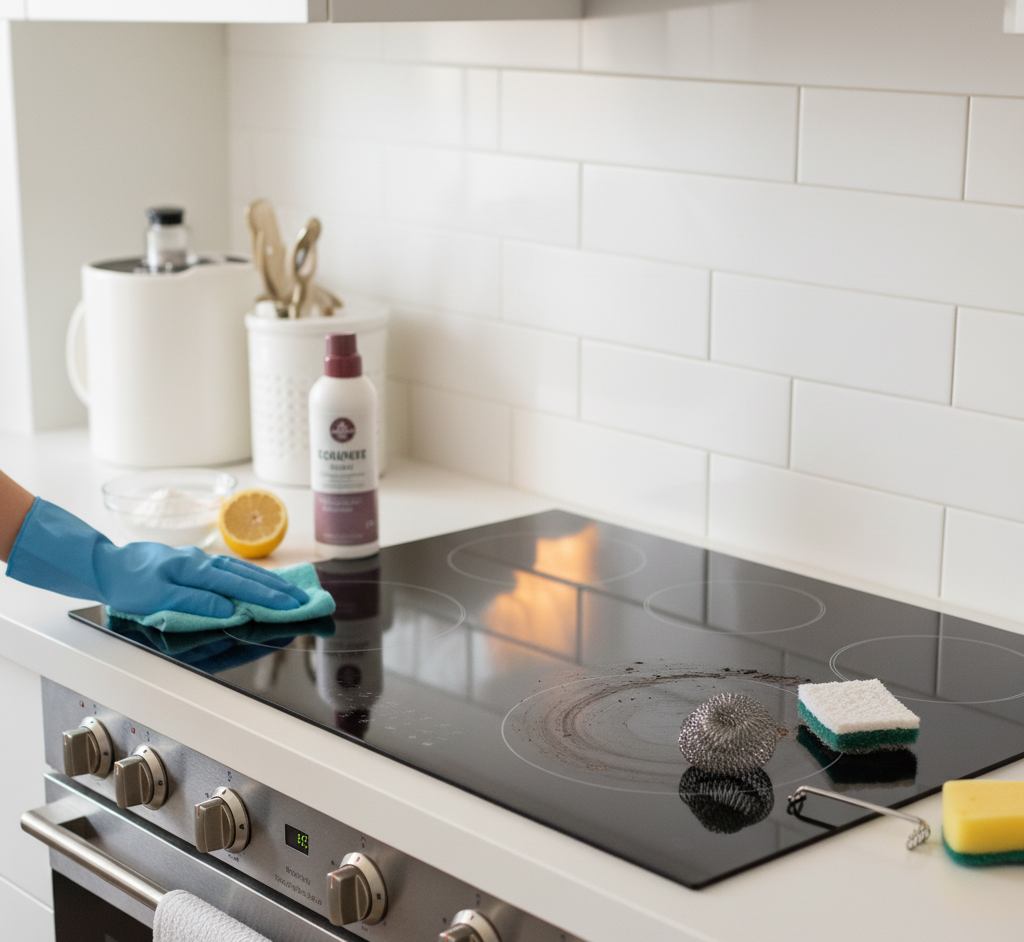
Cleaning a Glass Top Stove: The Do’s and Don’ts for a Perfect Shine

The glass top stove is the centerpiece of the modern kitchen. Its sleek, seamless surface offers a minimalist appeal that is both beautiful and functional. But for all its aesthetic charm, it is an appliance that strikes fear into the hearts of many homeowners. It looks so pristine, so delicate, that the first splatter of grease or boil-over of a sugary sauce can induce a wave of panic. We have all heard the horror stories of permanent stains, unsightly scratches, and a once-glossy surface dulled by the wrong cleaning methods. The truth is, cleaning a glass top stove is not a difficult or dangerous task. It is, however, a precise one. The glass-ceramic surface is a marvel of engineering, designed to withstand incredible temperature fluctuations, but it is not invincible. It is vulnerable to two primary enemies: scratches from improper tools and pitting from certain types of spills. The secret to keeping your glass cooktop looking brand new for years is not about using harsh chemicals or scrubbing for hours; it is about using the right tools, the right techniques, and, most importantly, a consistent routine. Understanding the Do’s and Absolute Don’ts Before we touch on how to clean, we must first establish the ground rules of what to avoid. Most damage to glass cooktops happens when well-intentioned people use the wrong products. To protect your investment, commit these rules to memory. The Absolute Don’ts: Never Use Abrasive Sponges: This is the cardinal sin of glass top stove care. Steel wool, green scouring pads, and any other abrasive sponge will create a web of fine micro-scratches on the surface. These scratches will not only dull the finish permanently but will also create tiny crevices where dirt and grime can become trapped, making future cleaning even more difficult. Never Use Abrasive Cleaners: Powdered cleansers like Comet or Ajax are designed for durable porcelain or stainless steel sinks, not for glass-ceramic. Their gritty particles will scratch the surface just as surely as an abrasive sponge. Never Use Ammonia-Based Cleaners: A standard glass cleaner like Windex might seem like a logical choice, but most contain ammonia. Ammonia is a harsh chemical that can be too strong for the cooktop’s surface, potentially causing discoloration or streaks that are difficult to remove. Never Use a Knife or Sharp Kitchen Utensil to Scrape: When faced with a stubborn, burnt-on piece of food, it is tempting to grab a butter knife to pry it off. This is a fast track to a deep, irreversible scratch. There is only one tool that is safe for scraping, which we will cover later. Never Clean While the Surface is Hot: Aside from the obvious safety risk of getting burned, applying a cool cleaning solution to a hot surface can cause thermal shock, which in extreme cases could crack the glass. Always wait for the indicator light to go off and for the surface to be cool to the touch. Never Let Sugary Spills Sit: If you are boiling jam, making candy, or a pot of sugary sauce boils over, this is the one time you must act quickly. A hot sugar spill can create a chemical bond with the glass-ceramic surface, causing permanent pitting or staining if it is left to cool completely. The Essential Toolkit  You do not need an arsenal of expensive, specialized products. A powerful and safe cleaning kit can be assembled from simple, effective household staples. Microfiber Cloths: You will need at least two—one for cleaning and one for buffing. Microfiber is soft, non-abrasive, and designed to trap dirt and absorb liquid without leaving behind lint. Baking Soda: This is your gentle but effective scrubbing agent. Its mild alkalinity helps to break down grease and food stains, and its fine particles provide just enough abrasion to lift grime without scratching. Distilled White Vinegar: This is your degreaser and polisher. The mild acid in vinegar cuts through grease and, crucially, dissolves the mineral deposits from hard water, which are a primary cause of streaks and hazy films. Keep it in a spray bottle, often diluted 50/50 with water. A Non-Abrasive Sponge or Pad: For scrubbing, you need a sponge that is safe for non-stick pans. A Cooktop Scraper: This is a specialized tool that is essential for any glass stove owner. It is a handle that holds a single-edge razor blade at a safe, low angle. When used correctly, it is the only tool that can safely remove heavy, carbonized food deposits without scratching the glass. Optional – A Commercial Cooktop Cleaner: Products like Weiman or Cerama Bryte are excellent. They are not just cleaners; they are conditioners. They often contain silicones that help to fill in microscopic imperfections and leave behind a protective film that makes future cleaning easier. This is best used as a final polishing step. Daily Maintenance and the Deep Clean Level 1: The Daily Wipe-Down The key to a perpetually clean stove is consistency. A quick, 60-second wipe-down after each use (once the stove is cool) will prevent the buildup that leads to major scrubbing sessions. Wait for it to Cool: Ensure the “Hot Surface” indicator light is off and the cooktop is cool to the touch. Remove Loose Debris: Use a dry paper towel or a microfiber cloth to wipe away any loose crumbs or food particles. Spray and Wipe: Lightly spray the surface with your 50/50 vinegar and water solution. The vinegar will immediately start to break down any light grease splatters from that meal. Buff Dry: Use a second, clean, dry microfiber cloth to wipe the surface dry. Use wide, circular motions to buff the surface to a streak-free shine. This simple routine is your best defense. If you do this every time, you will rarely need to perform a deep clean. Level 2: Burnt-On Messes This is the method for when life happens—a pot boils over, grease splatters and burns on, or the daily wipe-down has been neglected. Start with the Scraper: Once the cooktop is cool, tackle the most severe, raised deposits first. Take your cooktop scraper and, holding it at a low

Cleaning a Glass Top Stove: The Do’s and Don’ts for a Perfect Shine Read More »

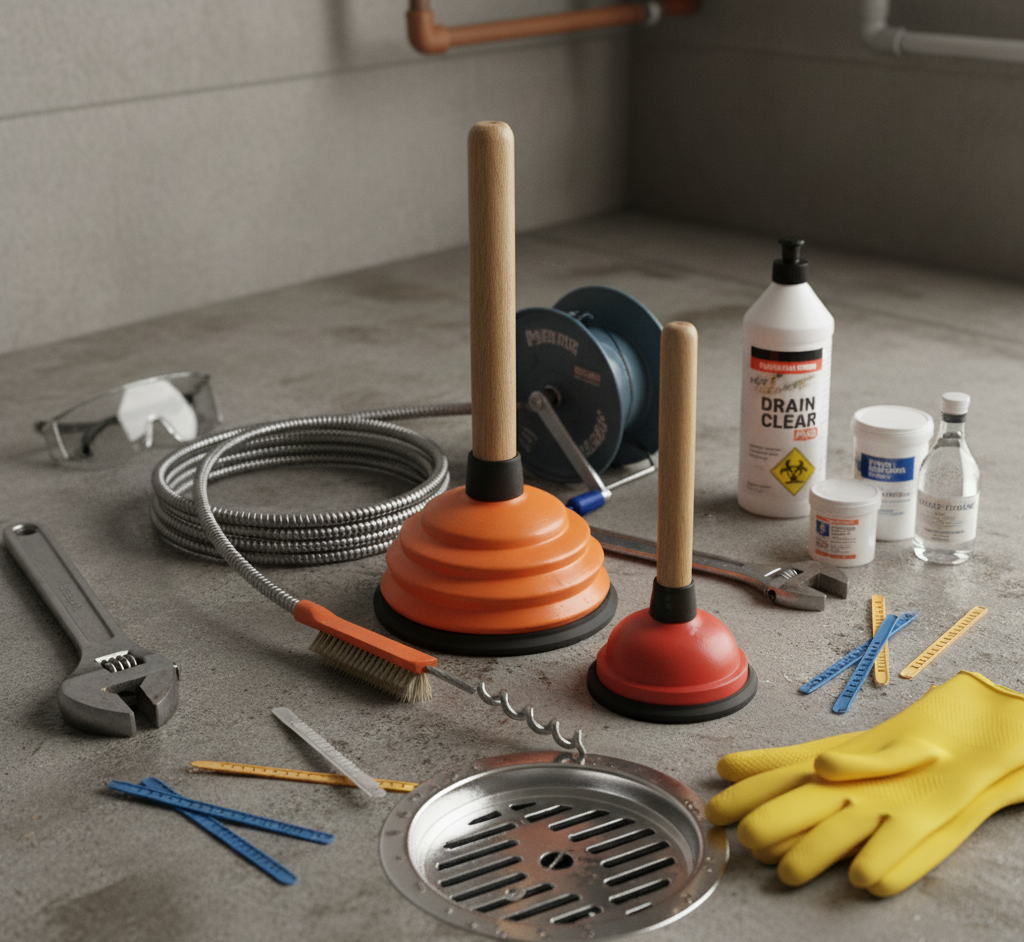
Clogged Drain? 4 Tips to Fix it Without Harsh Chemicals

Your clogged drain It starts with a subtle gurgling sound, a sign that the system is in trouble. Soon, the water in the sink takes just a little longer to disappear. Before you know it, you are standing in a shallow, murky pool at the end of your shower, or watching the kitchen sink fill with dirty water as you do the dishes. A clogged drain is one of the most common and frustrating household problems. It is a sudden, disruptive halt to the silent, efficient flow of water that we rely on every single day. The immediate temptation for many is to reach for a bottle of harsh, liquid chemical drain cleaner, pouring it down the drain in the hope of a quick, magical fix. This approach, however, is often the worst first step you can take. Chemical drain uncloggers are incredibly potent and dangerous substances that can cause more harm than good. To truly conquer a clog, you must first understand your enemy, then arm yourself with the right, methodical approach, escalating your attack from simple, safe solutions to direct, physical removal. 1.Location The nature of a clog is entirely dependent on its location. The kitchen drain and the bathroom drain are two different battlefields, with two different types of enemies. The kitchen sink is the primary recipient of grease, fats, and oils from cooking, along with small food particles. When you pour hot, liquid grease down the drain, it travels a short distance, cools, and then solidifies, coating the inside of the pipes. Over time, this sticky layer catches and holds food debris, coffee grounds, and other solids, gradually constricting the pipe until it is completely blocked. The bathroom drain, particularly in the shower or bathtub, faces a different foe: hair. Long strands of hair wash down the drain and act like a net. This net is then cemented together by the sticky, waxy residue of soap scum, conditioner, and toothpaste. This combination of a strong, fibrous net and a powerful, water-resistant binder creates a dense, stubborn plug that is incredibly effective at stopping the flow of water. The problem with reaching for a chemical drain unclogger is that these products are a brute-force, often indiscriminate weapon. Most are formulated with either sodium hydroxide (lye) or sulfuric acid. These are extremely caustic chemicals that work by generating a powerful chemical reaction to dissolve the blockage. This reaction creates significant heat, which can soften PVC pipes and, in older homes, can damage or corrode metal pipes, leading to leaks and far more expensive repairs. The fumes they release are toxic and can be a serious health hazard in a poorly ventilated bathroom or kitchen. Furthermore, these chemicals are devastating to the environment. If you have a septic system, they can kill the beneficial bacteria that your system relies on to break down waste. Even in a municipal system, they are eventually released into the waterways. The most immediate problem, however, is what happens when they fail to work. If the chemical does not clear the clog, you are now left with a pipe full of highly corrosive, dangerous liquid, making any subsequent attempt at physical removal with a plunger or a snake a hazardous undertaking. A far safer and more effective approach is to follow a logical progression of methods, starting with the least invasive. 2.Items You Have at Home The first line of attack, particularly for a slow-running kitchen sink, is boiling water. This method is aimed directly at the primary culprit: grease. Boil a full kettle or a large pot of water. Carefully pour the boiling water directly down the drain in two or three stages, allowing it to work for a few seconds between each pour. The intense heat can be enough to melt the solidified grease, breaking up the clog and flushing it through the system. This method is simple, cheap, and can be remarkably effective. A word of caution: if you have very old or brittle PVC pipes, the sudden, intense heat could theoretically damage them, but for most modern plumbing, it is a safe first step. If boiling water does not do the trick, the next step is the classic combination of baking soda and vinegar. This is a gentle, chemical-free method that works through a simple acid-base reaction. Start by pouring about half a cup of baking soda directly down the drain. Follow this with half a cup of distilled white vinegar. Immediately cover the drain with a plug or a cloth to contain the resulting reaction within the pipe. You will hear a fizzing and bubbling sound. This is the reaction creating carbon dioxide gas, and the vigorous bubbling action can help to physically dislodge and break up the gunk and grime of the clog. Let this mixture work for at least an hour, or even overnight for a more stubborn clog. Finally, flush the drain with a pot of boiling water. This method is excellent for maintenance and for minor, slow-running drains, but may not have the power to clear a complete and total blockage. When these gentle methods fail, it is time to escalate to direct, physical force. This is where manual tools come into play, and the most basic of these is the plunger. It is a tool most homes have, but few use to its full potential. It is important to know that there are two main types of plungers. The standard cup plunger is best for flat surfaces like a kitchen sink. The flange plunger, which has a smaller cup extending from the bottom, is designed to create a better seal in the curved opening of a toilet bowl, but it is also highly effective for bathtubs and showers. 3.Plunger and Drain Snake To use a plunger correctly, the first step is to create a proper seal. For a double kitchen sink, you must plug the other drain with a wet rag. In a bathroom sink or tub, block the overflow hole with a

Clogged Drain? 4 Tips to Fix it Without Harsh Chemicals Read More »