Summer Cleaning

Office Window canada

A Property Manager’s Guide to Hiring the Best Office Window Cleaning Service

Office Window Cleaning: A Property Manager’s Guide to Hiring the Best Service The facade of a commercial building is the silent ambassador of the brand inside it. Long before a client shakes a hand in the boardroom, the exterior sets the tone for professionalism and attention to detail. Glass is the primary lens through which a business is viewed, and when that lens is marred by streaks, urban grime, or hard water stains, it projects neglect. Office window cleaning is far more than a janitorial chore. It is a strategic maintenance task that affects brand reputation, asset longevity, and the well-being of the people who work behind the glass. Clean Windows Mean Better Light and Better Morale Natural light is a critical commodity in the modern workplace. Daylight regulates circadian rhythms, reduces eye strain from fluorescent lighting, and improves mood. Dirty windows act as a filter: layers of city dust and pollution diffuse sunlight, making the office feel smaller and dimmer. Regular exterior and interior glass cleaning removes that barrier, and the resulting brightness supports staff morale and energy. Urban Grime, Hard Water, and the Chemistry of Commercial Glass Commercial dirt is fundamentally different from residential dust. Office buildings sit in high-traffic zones and collect exhaust fumes, industrial particulate, and construction dust, which form a greasy film that chemically bonds to the glass. Removing it takes specialized degreasing agents and mechanical agitation, not just soap and a squeegee. Glass is also porous on a microscopic level. When mineral-rich water from concrete runoff, sprinklers, or acid rain sits on the pane and evaporates, it leaves hard deposits that the sun bakes into the surface. Over time this causes etching, sometimes called glass cancer, and once glass is etched it is permanently cloudy and rough, often requiring expensive replacement. A consistent cleaning schedule catches mineral buildup early, when mild acids or polishing compounds can still restore the pane. Safety, Pure Water Technology, and a Full Scope of Work Safety is the biggest difference between commercial and casual glass maintenance. Mid-rise buildings often need water-fed pole systems, while towers require rope access technicians or suspended stages. These are high-risk environments, and a professional company carries liability insurance and workers’ compensation coverage to protect the building owner. Trained crews also act as the eyes on the building’s skin, spotting hairline cracks, failing sealant, and loose gaskets before they become falling glass or water leaks. Modern exterior cleaning increasingly uses pure water technology. Tap water passes through reverse osmosis and deionization filters that strip out minerals, and this hungry water absorbs dirt from the glass and rinses it away without detergents. Because the water is pure, it dries completely spot-free, and no soapy runoff enters storm drains. Exterior glass cleaned with pure water or squeegee methods. Interior glass detailed to remove fingerprints, coffee splashes, and dust. Frames and sills wiped down so debris cannot hold moisture. Early diagnostics reported for cracks, failed seals, and loose gaskets. Debris in window tracks and along gaskets holds moisture, which corrodes aluminum frames and degrades rubber seals, eventually causing air leaks. Health Canada’s air contaminants guidance explains why controlling moisture and indoor pollutants matters for building occupants, and its mould prevention advice covers the damp corners where seals and frames fail. The CDC’s cleaning guidance reinforces that routine cleaning keeps workplaces healthier. How Often Should Office Windows Be Cleaned? Building area Recommended frequency Why it matters Retail frontage and medical offices Monthly or bi-weekly Close public scrutiny and physical contact Office tower exterior Twice a year, spring and autumn Removes winter salt and prepares for darker months Interior glass With each scheduled service Fingerprints and dust accumulate quickly Postponing cleaning is a false economy: the longer dirt sits, the more tenacious it becomes, and the more labor-intensive the eventual job. Tenants notice. Streaked windows are a frequent complaint and can shape the perception that a building is poorly managed, which matters at lease renewal time. A well-maintained envelope also keeps the HVAC load down, trimming heating and cooling costs. Choosing the Right Office Window Cleaning Partner Vet providers on safety record, training standards, and communication, not just price. A professional team works around your building’s schedule, often early mornings or weekends, and provides clear method statements and risk assessments. Toronto Shine Cleaning offers commercial cleaning services designed for these demands, backed by a $1,000,000 insurance policy and a $10,000 accidental breakage and surety bond. Call (647) 424-0355 to discuss your building, or review our cleaning prices and customer reviews. We can also support your facility with a deep cleaning service for offices and common areas, and a regular cleaning plan keeps shared spaces presentable between window visits. Frequently Asked Questions How often should office windows be cleaned? Ground-floor retail and medical offices usually need monthly or bi-weekly cleaning because they face close public scrutiny. Higher tower floors can go twice a year, typically spring and autumn. The key is consistency: dirt left too long becomes harder and more expensive to remove. Is pure water window cleaning safe for the environment? Yes. Pure water systems strip minerals from tap water with reverse osmosis and deionization, then use that hungry water to absorb dirt without chemical detergents. There is no soapy runoff entering storm drains, and the glass dries spot-free without manual drying. What is glass etching and can it be fixed? Etching happens when mineral-rich water evaporates on glass and the sun bakes the deposits into the surface. Early buildup can be lifted with mild acids or polishing compounds, but once the glass is truly etched it is permanently cloudy and may need replacement. Regular cleaning prevents it. Can my own maintenance staff clean high windows? High-rise and mid-rise work involves rope access, suspended stages, or water-fed poles, which carry serious fall risks. Professional companies follow strict safety protocols and carry liability insurance and workers’ compensation. For anything above ground level, trained technicians are the safer choice.

A Property Manager’s Guide to Hiring the Best Office Window Cleaning Service Read More »
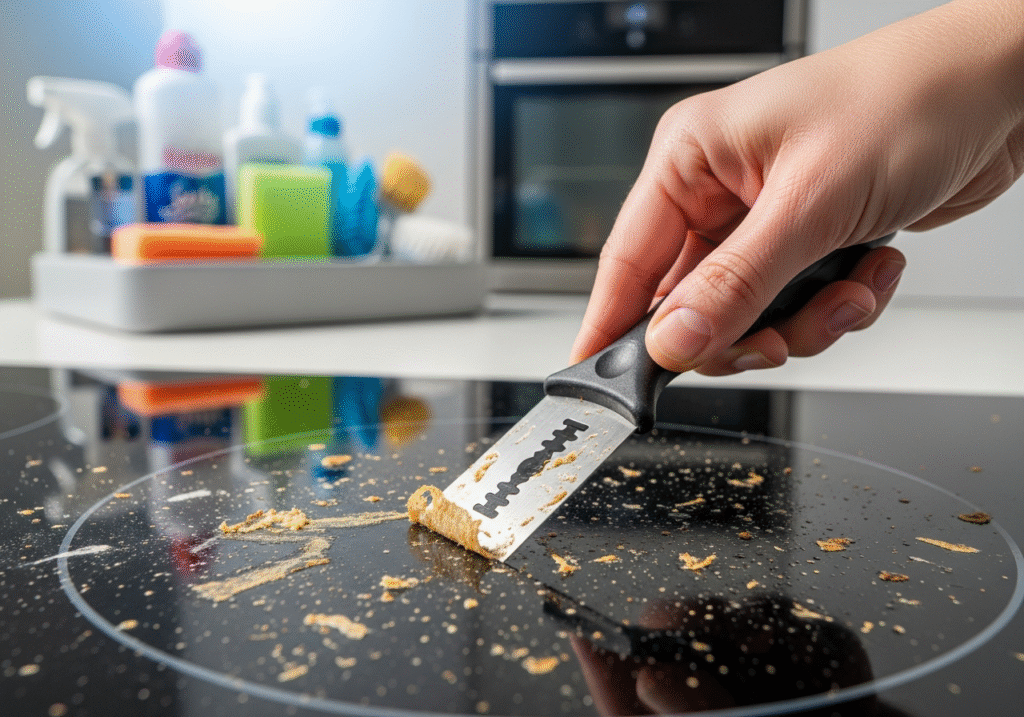
Razor Blade Scraper to Your Cleaning Kit Today

Why You Should Add a Razor Blade Scraper to Your Cleaning Kit Today

In the vast arsenal of cleaning tools, ranging from high-tech steam machines to complex chemical solvents, the humble razor blade scraper stands out as an anomaly. It is technologically primitive-a simple shard of steel held in a plastic or metal housing-yet it remains the ultimate problem solver for the most stubborn household soils. While the average homeowner often views the razor blade with trepidation, fearing that bringing a sharp edge near a delicate surface will result in catastrophic scratching, professional cleaners understand that the scraper is often safer and more effective than a scrubbing pad. The razor blade scraper operates on the principle of mechanical leverage, shearing the bond between the dirt and the surface rather than relying on abrasion. Understanding how to wield this tool transforms the cleaning process, turning hours of frustrating scrubbing into minutes of precise removal. How it Works To appreciate the utility of the razor blade scraper, one must first understand the physics of adhesion. When substances like paint, tree sap, burnt sugar, or hardened adhesives stick to a surface like glass or ceramic, they form a bond that is stronger than the friction provided by a cloth or a sponge. Attempting to remove these substances with a scouring pad requires applying significant downward pressure. This pressure creates friction, but because the scouring pad is abrasive, it acts like sandpaper. It grinds the soil, but it also grinds the surrounding surface. This is why glass cooktops often develop a hazy, swirled appearance over time; they have been micro-scratched by abrasive sponges. A razor blade scraper, by contrast, applies force laterally. It slides underneath the soil, exploiting the microscopic gap between the contaminant and the substrate. The blade acts as a wedge, lifting the debris off in a single sheet or flake without ever needing to grind the surface itself. The primary domain of the razor blade scraper is glass. Windows, mirrors, and glass-ceramic cooktops are materials that are harder than the steel of the blade, which allows the metal to glide over them without digging in. The glass cooktop is perhaps the most common application. When pasta water boils over or sugary sauces drip onto a hot burner, they carbonize instantly. Once cooled, this residue becomes concrete-like. Chemical cleaners can soften the top layer, but they rarely penetrate to the base of the burn. A razor blade scraper, held at a forty-five-degree angle, slices through this carbonization effortlessly. The key is lubrication. A scraper should never be used on a dry surface. The presence of a liquid-whether it is a specialized glass cooktop cleaner, soapy water, or even a glass cleaner-reduces friction and allows the blade to hydroplane slightly. This prevents the “chatter” or skipping of the blade that can cause gouges. Windows Windows are another area where the scraper is indispensable, particularly after renovations or painting projects. Painters tape is effective, but paint splatter is inevitable. Removing dried latex or oil paint from a windowpane with a rag is nearly impossible; it simply smears the paint into a thinner, more stubborn film. A razor blade snaps the dried paint off the glass in satisfying, solid chips. Similarly, stickers and decals that leave behind a gummy residue are easily conquered. Solvents like acetone can dissolve the glue, but they create a sticky mess that spreads. A scraper pushes the adhesive and the paper backing off together, leaving clean glass behind. This is also true for biological assaults, such as bird droppings or insect residue on exterior windows, which bake onto the glass in the sun and resist standard washing. However, the power of the razor blade scraper comes with strict rules of engagement. The first rule is the angle of attack. The blade must be held at a shallow angle, typically between thirty and forty-five degrees relative to the surface. If the angle is too steep, approaching ninety degrees, the blade ceases to act as a scraper and begins to act as a chisel. This is where damage occurs. A steep angle drives the edge into the glass rather than along it. Conversely, an angle that is too shallow prevents the edge from biting into the residue. Finding the “sweet spot” is a tactile skill; you can feel when the blade catches the dirt and begins to lift it. How to Use The second rule is unidirectional motion. A razor blade scraper is a pushing tool, not a pulling tool. You push the blade forward into the dirt, lift it away from the glass, pull it back, and push again. Dragging the blade backward across the surface is a cardinal sin. The edge of a razor blade is incredibly thin and fragile. If you drag it backward, the microscopic edge can roll over or chip. A chipped blade is essentially a serrated knife. The next time you push that damaged blade forward, the tiny burr on the metal will etch a scratch into the glass. This is why inspecting the blade before every use is mandatory. If the blade looks rusty, dull, or uneven, it must be discarded immediately. A fresh blade is a safe blade. There is also a critical distinction to be made regarding the type of glass being cleaned. Not all glass is created equal. Standard annealed glass and heat-strengthened glass are generally safe for scraping. However, tempered glass-often found in safety doors, shower screens, and side windows of cars-presents a unique risk. During the tempering process, microscopic glass dust, known as fabricating debris, can bake onto the surface of the glass. These particles are invisible to the naked eye. When a razor blade slides over them, it can dislodge these tiny glass rocks and drag them across the surface, creating deep, chaotic scratches. This is not the fault of the metal blade, but the fault of the debris being dragged by it. Professional window cleaners often perform a sound test on a small, inconspicuous corner of tempered glass. If the scraper makes a gritty, grinding sound, they stop immediately. For

Why You Should Add a Razor Blade Scraper to Your Cleaning Kit Today Read More »

Grill Cleaning A Masterclass in Barbecue Grill Maintenance

Grill Cleaning: A Masterclass in Barbecue Grill Maintenance

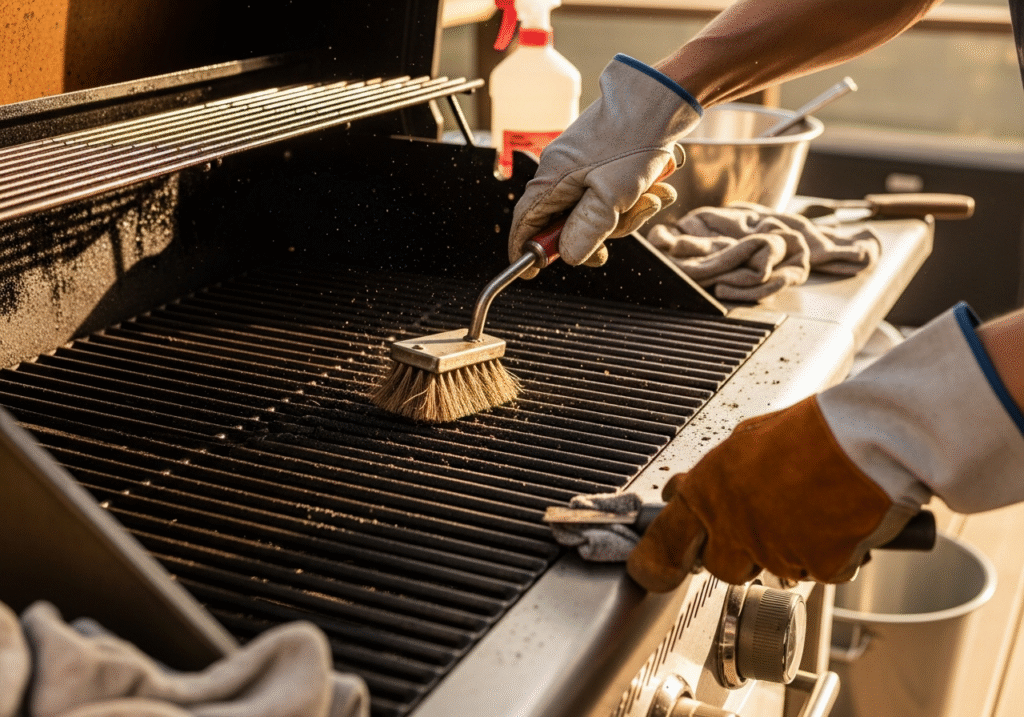
Cleaning the grill is important and the barbecue is undoubtedly the centerpiece of the outdoor culinary experience, a symbol of leisure, summer evenings, and the primal joy of cooking over an open fire. It’s a meeting point for friends and family, where the aroma of grilled meat and caramelized vegetables creates a festive atmosphere.However, once the last burger is flipped and the guests have departed, the grill is often abandoned to cool in the darkness, coated in a layer of rendered fat, charred marinades, and ash. This cycle of use and neglect is the primary cause of equipment failure and culinary disappointment. A grill is a cooking appliance just like a stove or an oven, yet it is exposed to the elements and subjected to intense, direct heat that carbonizes food residue into a stubborn, cement-like substance. Mastering the art of Barbecue Grill Cleaning is not merely a chore to be endured; it is a fundamental requirement for food safety, fire prevention, and the preservation of the flavor profiles you work so hard to create. A Dirty Grill Enhances The Flavor To understand the necessity of Barbecue Grill Cleaning, one must first dispel the persistent myth that a dirty grill adds flavor. There is a common misconception among amateur pitmasters that the black crust accumulated on the grates and the flavorizer bars is “seasoning,” similar to what one might find on a cast-iron skillet. This is false. A cast-iron skillet is seasoned with polymerized oil that creates a non-stick surface. The buildup on a grill is simply carbonized food waste, rancid grease, and soot. When this material heats up, it does not release a pleasant smoky aroma; it emits acrid, bitter smoke that coats fresh food with the taste of old, burnt meals. Furthermore, this buildup contains polycyclic aromatic hydrocarbons (PAHs) and heterocyclic amines (HCAs), chemical compounds formed when fat burns at high temperatures, which are known carcinogens. Regular Barbecue Grill Cleaning removes this toxic residue, ensuring that the smoke flavoring your food comes from your wood chips or charcoal, not from the decaying remnants of last month’s chicken wings. The process of Barbecue Grill Cleaning must begin with a focus on safety, particularly regarding the fuel source. If you are working with a gas grill, the tank should be turned off and disconnected. If it is a charcoal grill, all old ash must be cold and removed. The most critical safety hazard in a neglected grill is the grease fire. Every time you cook fatty foods, the rendered liquid drips down past the burners and collects in a tray or cup at the bottom of the unit. Over time, this grease creates a thick, flammable sludge. If a flare-up from the burners reaches this reservoir, the entire bottom of the grill can become an inferno that is difficult to extinguish with water. Routine Barbecue Grill Cleaning involves locating this grease management system-often hidden behind the doors of the cart-and scraping out the tray or replacing the disposable liner. Neglecting this hidden area is the leading cause of grill-related property damage. How to Clean Properly The grates are the primary point of contact for your food and naturally receive the most attention during Barbecue Grill Cleaning. The method of cleaning depends entirely on the material. Porcelain-coated cast-iron grates are fragile; if the porcelain chips, water enters the iron and causes rust, which eventually destroys the grate. For these, a soft brass brush or a nylon scrubber is preferred over harsh steel. Stainless steel grates are more durable and can withstand aggressive scrubbing with a stainless steel wire brush or a scraper. However, a significant safety concern has arisen in recent years regarding wire brushes. Loose bristles can snap off, adhere to the sticky grill surface, and eventually become embedded in food, leading to severe medical emergencies if ingested. As a result, many experts now recommend using coil brushes, wooden scrapers that form-fit to the bars over time, or even a ball of crumpled aluminum foil held with tongs for safe Barbecue Grill Cleaning. Beneath the grates lie the heat deflectors, often called flavorizer bars or heat tents. These metal angles protect the burners from direct dripping and help distribute heat evenly. They are also the first line of defense against grease and are subjected to extreme thermal shock. During Barbecue Grill Cleaning, these bars should be removed and scraped clean. They are often coated in a thick layer of white and black ash. If this ash is allowed to build up, it acts as an insulator, preventing the grill from reaching high searing temperatures. If these bars are crumbling or have holes rusted through them, cleaning is futile, and they must be replaced to protect the delicate burners underneath. The Burner Tubes The burner tubes themselves are the engine of a gas grill, and maintaining them is a delicate part of Barbecue Grill Cleaning. Over time, the tiny ports-the holes where the gas exits-can become clogged with drippings or corrosion. This results in uneven heating, where one side of the grill is hot while the other is tepid. Worse, insects such as spiders are attracted to the smell of propane and the shelter of the tubes. They often spin webs inside the venturi tubes (the mix point for air and gas), which creates a blockage. This blockage forces gas back toward the control knobs, leading to a “flashback” fire behind the control panel. Cleaning the burners involves using a venturi brush to clear the tubes and a small pin or paperclip to poke out any clogged ports, ensuring a consistent blue flame across the entire length of the tube. The interior of the lid and the cookbox is an area that often causes alarm for grill owners. Over time, the inside of the lid develops what looks like peeling black paint. This is rarely paint; it is a deposit of carbonized grease and smoke that has built up in layers and is now flaking off due to heat expansion. While not toxic, these flakes can fall onto your food, looking like

Grill Cleaning: A Masterclass in Barbecue Grill Maintenance Read More »

cleaning an air fryer

5 Signs Your Air Fryer Needs a Deep Clean Immediately

Your Air Fryer Needs a Deep Clean More Often Than You Think The air fryer promised deep-fried crunch on a fraction of the oil, and it delivers. But the mechanism that makes it work, high-speed circulation of superheated air, is also what coats the walls, fan blades, and heating element with a film of grease, crumbs, and spices. That debris polymerizes into a sticky, tar-like coating that smokes, ruins the flavor of your food, and can become a fire hazard. Most owners rinse the basket and stop, while the heart of the machine slowly suffocates. Here are the signs and the clean that fixes them. Five Signs Your Air Fryer Needs a Deep Clean Now Smoke from the vents means old residue burning off. An acrid smell at startup means the element is cooking last week’s dinner again. Food that tastes like its predecessors means airborne grease is redepositing. Visible brown spots or greasy film on the heating coil, which sits inches from the food and bakes fat almost instantly. A drawer that sticks or will not close fully, usually from crumbs packed in the basket channel. Left alone, the buildup insulates the element, forces the fan motor to work harder, and sets off fire alarms. Here is how to clean it safely. Part Method Never Basket and pan Hot water and grease-fighting soap, 20 minute soak, non-abrasive sponge Steel wool or green scouring pads on the coating Heating element Damp brush with baking soda paste on tough patches Spraying water or cleaner toward the motor cavity Fan blades Long-handled brush or cotton swabs for surface grease Disassembling the unit, which voids the warranty Interior walls Microfiber cloth dampened with vinegar and water Leaving a soapy film that burns on the next cook Step One: The Basket and Pan Unplug the machine and let it cool completely. Most baskets are dishwasher safe, but the harsh detergents and high heat degrade the fragile non-stick coating over time. Wash by hand: fill the basket with hot water and grease-fighting dish soap and soak for 20 minutes. Never use a green scouring pad or steel wool, which destroy the coating in seconds. Use a non-abrasive sponge or soft-bristled brush, and for stubborn spots apply a paste of baking soda and water, a mild alkali that dissolves grease with only gentle abrasion. Step Two: The Heating Element and Fan Remove the basket, lay the unit on its back, and look up at the cavity where the spiral heating element and fan are likely coated in dark, baked-on grease. Never spray water or cleaner into this area, which runs directly toward the motor and electronics. Dip a soft toothbrush or bottle brush in warm soapy water, shake it out until just damp, and gently scrub the coil. Bending the element can ruin the machine. For tough patches, apply baking soda paste with the brush, let it dry, then scrub it off. The fan blades matter most for airflow: a long-handled brush or cotton swabs clear the surface grease. Do not disassemble the unit, which voids the warranty. Step Three: Walls, the Steam Hack, and the Exterior Wipe the interior walls with a microfiber cloth dampened in vinegar and water, well wrung out, to cut grease and neutralize odors without leaving a soapy film that burns on the next cook. For lingering stale smells, microscopic grease is trapped in the fan assembly: place a small oven-safe dish of water with lemon slices in the basket and run the fryer at moderate heat for 10 to 15 minutes, then cool and wipe. The steam loosens grime and the lemon deodorizes. The handle and control panel are germ hotspots because air fryers get handled with greasy hands; CDC clean hands guidance stresses hand washing during food prep for this reason. Damp cloth cleans the panel, but never spray liquid directly at a digital display where moisture can seep behind the screen. Run a dry cloth over the rear vents, which attract dust that sticks to warm plastic. For kitchen hygiene overall, CDC advice on cleaning and disinfecting your home provides a useful baseline on where germs live. Prevent the Grime Before It Bakes On Use perforated parchment liners or silicone inserts designed for air fryers to catch grease; blocked airflow cooks unevenly. Never put an empty paper liner in the machine; the air current lifts it into the heating element where it can catch fire. Once every few uses, wipe the cooled but still slightly warm element with a damp cloth to prevent grease from baking on repeatedly. Inspect the power cord regularly; the cord can get crushed against the hot exhaust vent behind the appliance. Air Fryer Cleaning FAQ Why is my air fryer smoking after I cleaned it? Residue remains on the element or cleaning liquid seeped toward the electronics. Unplug it, wipe everything damp rather than wet, and run it empty for a few minutes to confirm the smoke is gone. How often should I deep clean the air fryer? The basket needs attention after every use, but the full element, fan, and chamber clean described above is due roughly once a month with regular cooking, or sooner if any of the five warning signs appear. Can I use oven cleaner on the heating element? No. Aggressive caustic sprays damage coatings, drip into the motor, and leave fumes that coat your next meal. Warm soapy water, baking soda paste, and diluted vinegar handle everything safely. The non-stick coating is flaking. Can I still cook with it? Stop once coating lifts past a light scratch; flaking means food and metal contact. Replacement baskets are cheap next to the risk of eating coating flakes. A Clean Appliance in a Healthy Kitchen A clean air fryer heats faster, smells better, and produces food that tastes like itself, and the full clean is no five-minute task: awkward angles, delicate parts, stubborn grease. When appliance maintenance piles up alongside everything else, hand the whole kitchen to professionals who apply

5 Signs Your Air Fryer Needs a Deep Clean Immediately Read More »

Dangerous to Your Health: 5 Common Products That are Dangerous For Your Daily Life

Are Everyday Cleaning Products Dangerous to Your Health? Your home feels like the safe place, sealed off from city pollution. Inside many Toronto houses the opposite is true: the sprays under the sink can make indoor air more toxic than the air outside. Health Canada warns that household chemical products can cause poisonings, burns, fires and explosions when handled unsafely. A strong chemical smell is not proof of clean. Here is what five everyday products actually do, and the simpler habits that keep homes safe. Five Common Products Dangerous to Your Health 1. Bleach Bleach, the sodium hypochlorite default against mold, mildew and bathroom grime, is corrosive enough to burn skin and eyes on contact, and it is highly volatile. In a closed shower stall or small bathroom, its fumes react with organic matter and form chlorinated volatile organic compounds that immediately inflame the mucous membranes of the throat and lungs, especially dangerous with respiratory conditions. The deadliest habit is mixing: bleach plus ammonia, which lives in urine and many glass cleaners, generates chloramine gas, and bleach plus an acidic cleaner releases chlorine gas. Both can lead to hospitalization or worse. 2. Ammonia Glass and Window Cleaners Ammonia is why glass cleaner dries fast without streaks, and why it demands respect. It hunts moisture, so inhaled ammonia attacks the eyes, throat and lungs directly. High concentrations cause chemical burns in the respiratory tract and aggravate chronic conditions like asthma. Trigger-sprays aerosolize it into a fine mist that lingers in your breathing zone. That sharp odor is a warning signal, not evidence the glass needs you. 3. Fragrance, Air Fresheners and Fabric Deodorizers The word fragrance, or parfum, on a label is a regulatory loophole: scents count as trade secrets, so the hundreds of chemicals behind the scent are never listed. The cocktail commonly includes phthalates, added to make scents linger, which are known endocrine disruptors that mimic hormones and can interfere with reproductive development over long-term exposure. Air fresheners and fabric sprays do not clean anything. Some release agents that deaden your nerves or coat nasal passages with oily film; others bury odors under volatile organic compounds tied to headaches, dizziness and fatigue. Aerosol propellants add flammable lung irritants. The Government of Canada’s household products safety hub lists hazards in everyday cleaning items. 4. Oven Cleaners and Drain Openers Oven cleaners are built on lye, or sodium hydroxide, which strips baked-on grease by turning it into soap. That same reaction destroys living tissue: splashes cause severe burns and permanent blindness. Spraying a warm oven vaporizes the lye into a toxic cloud that fills the kitchen. Drain openers burn through hair and grease clogs with concentrated sulfuric acid or lye, generating intense heat that can damage old pipes; if a plumber later snakes a surviving clog, the splash-back is caustic. 5. Disinfectant Wipes and Sprays Quaternary ammonium compounds, the quats behind most disinfectant wipes and sprays, kill germs well, but they are powerful lung irritants. Growing evidence suggests frequent exposure can cause asthma even in otherwise healthy users. Quats also leave a residue, and a child who touches a wiped table then sucks their fingers is ingesting a pesticide. Blanketing whole rooms instead of high-touch points adds chemical load and feeds antibiotic resistance. Two Traps Behind Friendly Labels Carpet cleaners and upholstery shampoos bring their own risks. Many spot removers rely on perchloroethylene, a dry-cleaning solvent that is a neurotoxin and a classified carcinogen, and across a large floor it keeps off-gassing for days or weeks. Naphthalene, the mothball chemical in some carpet cleaners, releases fumes that can cause confusion, nausea and liver damage. Fibers trap all of it and release it back with every step and sit. Green labels deserve the same skepticism. The word natural is largely unregulated in cleaning products, and a green bottle can still carry allergens like limonene, a citrus oil that reacts with ozone in your air to form formaldehyde, a known carcinogen. Concentrated plant-based detergents can still irritate skin and lungs. Read the ingredient list, not the leaf on the label. The Real Risk Is the Daily Total Toxicologists call the running tally your body burden. One spray does little; a weekly ritual of glass cleaner, floor polish, counter spray, toilet cleaner and air freshener becomes a chemical soup the body must filter. When that load stays high, chronic inflammation, skin conditions and respiratory sensitivity can follow. Children and pets pay the most because smaller bodies and faster metabolisms process the same exposure less efficiently. Safer Swaps That Still Clean The most effective cleaner is usually the simplest: mechanical action. Removing dirt beats masking it. Instead of Reach for Why it works Everyday surface sprays Microfiber cloth, water and real scrubbing Fibers trap dirt and pathogens, removing more bacteria than a light chemical wipe, with no residue left behind Bleach on general surfaces Hydrogen peroxide Disinfects without chlorine fumes or toxic residue Commercial limescale removers White vinegar A mild acid that dissolves mineral deposits and soap scum without off-gassing Scouring powders Baking soda Gentle physical abrasion for sinks, tubs and baked-on messes Ventilation and Protection: The Free Upgrades Even safe cleaners need discipline. Health Canada’s page on using household chemicals safely covers the buying, use and storage rules that prevent accidents, and these habits carry it into daily practice: Ventilate. Never clean a sealed room: open a window and run the exhaust fan, especially in small bathrooms where fume levels spike fastest. Protect your skin. It is the body’s largest organ and absorbs chemicals readily, so glove up around degreasers and solvents and wear a mask for concentrated products. Remove, don’t mask. The goal is neutral air and residue-free surfaces, not a perfume cloud that signals a fresh chemical dose. Frequently Asked Questions Is it really dangerous to mix cleaning products? Yes. Bleach plus ammonia releases chloramine gas, and bleach plus any acidic cleaner releases chlorine gas. Both react within seconds in a closed room and can lead to hospitalization. Use one product

Dangerous to Your Health: 5 Common Products That are Dangerous For Your Daily Life Read More »

Washroom Cleaning

Beyond the Surface: Why Washroom Cleaning Requires a Different Strategy

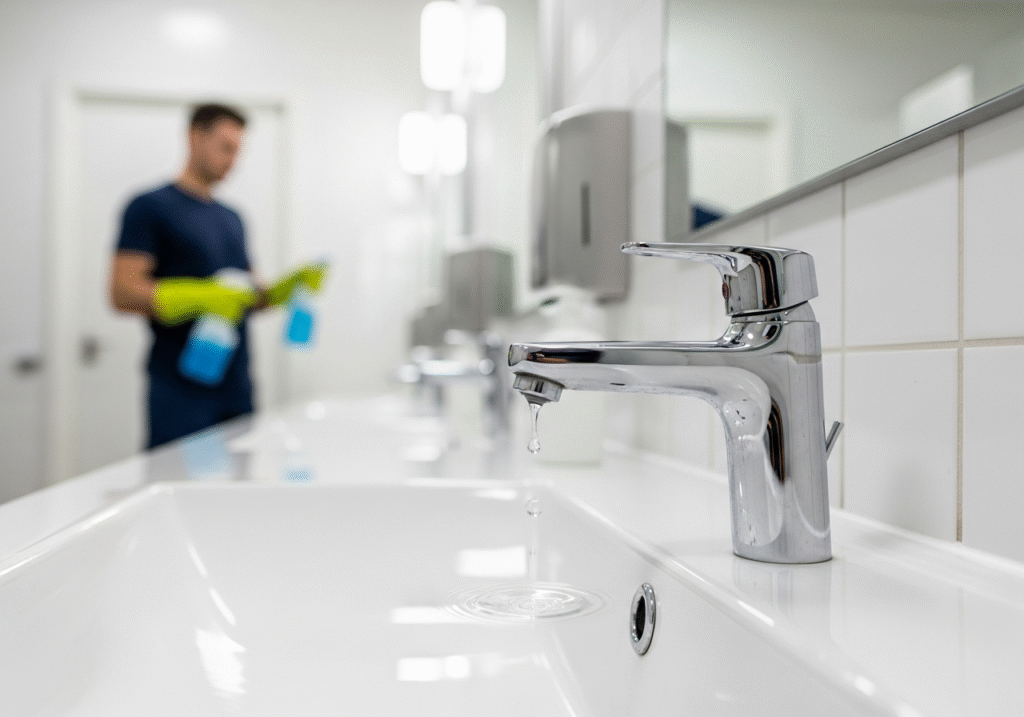
The washroom is undeniably the most functionally demanding environment within any architectural structure. It is a dedicated zone where the biological realities of human life intersect with the rigid requirements of sanitation. Unlike a living room or a bedroom, where cleaning is largely a matter of aesthetics and dust management, washroom cleaning is a constant battle against microbiology and chemistry. Every surface in a bathroom is subjected to a relentless cycle of wetting and drying, a process that creates distinct layers of mineral deposits, soap scum, and bacterial colonies known as biofilm. To clean a washroom effectively, one must move beyond the superficial act of wiping surfaces and understand the microscopic warfare taking place on the tile, the porcelain, and the grout. 1.Soap Residue The foundation of effective washroom hygiene lies in understanding the nature of the dirt you are fighting. In the shower and bathtub, the primary enemy is calcium stearate, commonly known as soap scum. This substance acts as a binding agent for filth, formed when the fatty acids in bar soap react with the minerals in hard water. This reaction creates a waxy, insoluble precipitate that clings tenaciously to fiberglass, glass, and tile. Trying to remove this substance with a standard all-purpose cleaner is often an exercise in futility because most general cleaners are pH-neutral. To break down the alkaline mineral bonds of soap scum, you need an acidic cleaner. This is why professional cleaners often rely on products containing phosphoric or citric acid. However, this chemical warfare requires caution; acid can etch natural stone like marble or travertine, destroying the finish permanently. 2.Mold Biofilm presents a different, more insidious challenge than simple dirt. This slime layer is a complex colony of bacteria that adheres to surfaces and secretes a protective, glue-like substance. In the washroom, this often manifests as the pink or orange discoloration seen in the corners of the shower. While it wipes away easily, it returns rapidly because the colony is resilient. True mold, typically black or dark green, is a fungus that roots into porous surfaces. The grout lines between your tiles are the most vulnerable points in the room. Grout is essentially cement, a porous material that absorbs water and organic matter like a sponge. When mold establishes itself in grout, surface scrubbing is often insufficient because the root structure lies deep within the pores. Effective remediation requires penetrating cleaners that can reach the sub-surface level to kill the root, followed by a sealer to lock moisture out. 3.Toilet The toilet, often viewed as the centerpiece of washroom cleaning, is frequently cleaned incorrectly due to a focus on the visible bowl rather than the invisible hygiene hazards. The mechanics of the flush create what is known as an aerosol plume. When a toilet is flushed with the lid up, microscopic droplets of water mixed with waste are ejected into the air, settling on nearby surfaces. Cleaning the toilet requires a top-down approach that addresses this spread. The most neglected area is the intersection between the toilet base and the floor. This area often accumulates a mix of condensation, dust, and stray urine, creating a persistent odor that no amount of air freshener can mask. Furthermore, the siphon jets-the small holes under the rim where water enters the bowl-often become clogged with mineral deposits and mold, reducing flush power and harboring bacteria. A bent brush is necessary to physically dislodge this buildup. 4.Faucet Aerator The sink and vanity area suffer from a unique cocktail of toothpaste splatters, hair, and makeup residues. The faucet aerator, the small mesh screen at the tip of the spout, is a hidden trap. It filters sediment from the water lines, but it also creates a damp environment where bacteria can grow. If the water flow seems irregular, it is likely because the aerator is calcified. Unscrewing this piece and soaking it in vinegar is a maintenance step that ensures the water you use to brush your teeth is actually clean. The sink drain, specifically the overflow hole near the top of the basin, is a dark, damp cave that rarely gets cleaned. It creates a perfect breeding ground for biofilm, which releases a musty, sewer-like odor. Pouring a cleaning solution down the overflow and using a small brush to agitate the interior walls is necessary to eliminate this phantom smell. 5.Mirrors and Glass Surfaces Mirrors and glass surfaces in the washroom are unforgiving of poor technique. The high humidity of the room often causes dust to stick to the glass, creating a muddy streak when wiped with a damp cloth. The secret to streak-free glass is not the chemical, but the tool. Traditional cotton cloths often leave lint or residues that cause streaking. A high-quality microfiber cloth, specifically woven for glass, uses microscopic hooks to lift oils and dust without the need for heavy detergents. Furthermore, the edges of the mirror, where the glass meets the frame, are often prone to corrosion caused by harsh ammonia-based cleaners seeping behind the glass. Cleaners should always be sprayed onto the cloth, never directly onto the mirror. 6.Floor The floor of the washroom is the final resting place for everything that falls or settles in the room. Because of the high moisture levels, dust on a bathroom floor does not sweep up easily; it smears. This mud-like dust packs into the corners and the grout lines. Mopping is often ineffective because it simply pushes this dirty water around, filling the low-lying grout lines with a slurry of gray filth. True floor hygiene in a washroom requires hand-cleaning the perimeter and the corners where the mop cannot reach. The area behind the toilet, often cramped and difficult to access, is a prime location for dust bunnies to collect moisture and begin to rot. This area should always be cleaned by hand to ensure that the source of potential odors is physically removed. 7. Exhaust Fan Ventilation is the invisible cleaner of the washroom. The exhaust fan is the single most important

Beyond the Surface: Why Washroom Cleaning Requires a Different Strategy Read More »

Persian rug being used

Persian Carpet: How to Identify if Your Rug Needs a Professional Wash or Just a Vacuum

Persian Carpet Care: Professional Wash or Just a Vacuum? A Persian carpet is far more than a floor covering. It is a piece of art, a family heirloom, and a historical document woven from wool, silk, and cotton with complex natural pigments. Because it is an organic textile, its care follows a different philosophy from synthetic wall-to-wall carpeting. Treating a hand-knotted Persian rug with the same chemicals and mechanical aggression used on a polyester rug is the fastest way to destroy its value. The Anatomy of a Hand-Knotted Rug: Why Grit Is Destructive A Persian rug is held together by millions of hand-tied knots, and that density creates a unique soiling problem. Fine dust and grit migrate down through the pile and settle deep in the foundation, where they act like tiny shards of glass. Every footstep grinds those particles against the wool, slicing fibers at the base like a guillotine. Standard vacuuming cannot remove this deep sediment, and the beater bar on most upright machines is a primary cause of damage: it pulls at the knots, shreds the pile, and can tear the fringes. The correct approach is suction only, plus the occasional vacuum of the back of the rug so gravity helps vibrate grit out of the foundation. Alkaline Cleaners and the Chemistry of Wool Wool is a protein fiber protected by a layer of scales and natural oils called lanolin, which give the rug its sheen and stain resistance. Most commercial carpet cleaners are highly alkaline, formulated for synthetic grease, and they strip the lanolin, leaving wool brittle, dry, and dull. High alkalinity can even cause a chemical burn that turns the wool yellow or brown permanently. Persian rugs need a pH-neutral or slightly acidic solution that respects the protein structure, which is why traditional methods favor vinegar or plant-based shampoos. Dyes, Heat, and the Risks of DIY Spot Cleaning Many older and tribal rugs use vegetable dyes that are not chemically locked into the fiber. These dyes bleed when wet, and a common tragedy happens when a homeowner spot-cleans a spill with hot water and a generic cleaner. The heat opens the fiber cuticles, the dye migrates, and deep reds bleed into creamy white areas, creating a muddy, irreversible stain. Hot water is almost always a mistake: heat and agitation cause felting, so the fibers shrink and the rug distorts, buckles, and no longer lies flat. Stain response is where most rugs are lost. Panic leads to frantic scrubbing, but wet wool fibers are swollen and vulnerable. Scrubbing distorts the pile, untwists the fibers, and creates a texture difference called blooming that remains even after the stain is gone. The only correct immediate action is blotting: pressing straight down with a clean white cotton towel to absorb liquid without lateral movement. Pet Urine, the Fringe, and Water Damage Pet urine is a severe threat that goes beyond staining. It starts as an acid but becomes highly alkaline as it decomposes, which destabilizes dyes and, more insidiously, rots the cotton foundation in a condition known as dry rot. The salts left behind pull moisture from the air, keep the foundation damp, and feed bacteria until the threads crack or tear when the rug is moved. Standard enzymatic cleaners often leave sticky residues that attract more dirt, so pet urine usually requires a full immersion wash by a professional to flush the salts out completely. The fringe is the end of the warp threads that form the rug’s skeleton, and if it unravels the knots slide off. Never bleach it, because bleach degrades cotton and makes the threads brittle. Clean it gently with the same mild solution as the rest of the rug, and never let a beater bar touch it. Water damage is usually the result of improper drying after a DIY wash. A dense Persian rug traps moisture in its center, and mold and mildew can develop in as little as 24 hours, leaving a permanent odor and fungal growth that eats the cellulosic fibers. Professional facilities use centrifuges and temperature-controlled drying rooms to get the rug bone dry; washing it on a driveway leaves it wet for days, inviting rot. Steam Cleaning vs True Rug Washing Treatment What it does Safe for Persian rugs? Suction-only vacuuming Lifts surface dust without agitation Yes, as routine maintenance Spot blotting Absorbs fresh spills straight down Yes, with a clean white towel Hot water extraction Injects hot detergent into the pile No, heat and alkalinity damage wool Immersion rug wash Dusting, dye test, cool water, controlled drying Yes, at a dedicated facility Most in-home carpet cleaners use hot water extraction, which is catastrophic for Persian rugs: the heat and high alkalinity are wrong for wool, and cleaning on the floor means the back is never rinsed properly. A true wash happens at a dedicated facility where the rug is dusted, tested for dye stability, submerged in cool flowing water, and dried under controlled conditions. The CDC notes that mold grows on carpet and fabric wherever moisture lingers, and Health Canada’s mould guidance is the same message: damp textiles need rapid, thorough drying. For routine upkeep, follow the CDC’s soft surface cleaning guidance for carpet and rugs. Deep grit that suction cannot lift from the knot foundation. Any dye bleed, color migration, or bloomed pile after a spill. Pet urine accidents, which leave salts and may cause dry rot. Fringe damage, musty odor, or a rug that stayed wet more than a day. When these signs appear, a professional wash is the safe answer. Toronto Shine Cleaning applies the same rigorous, knowledgeable approach to your whole home, with a $1,000,000 insurance policy and $10,000 breakage and surety bond behind every visit. Call (647) 424-0355, see our cleaning prices, or book a deep home cleaning for the rest of your residence. A regular maid service keeps everyday dust from settling into fine textiles, and we serve locations across the GTA. Frequently Asked Questions Can I steam clean a Persian rug?

Persian Carpet: How to Identify if Your Rug Needs a Professional Wash or Just a Vacuum Read More »

Make Your Stove Look New Again with These Simple Tools

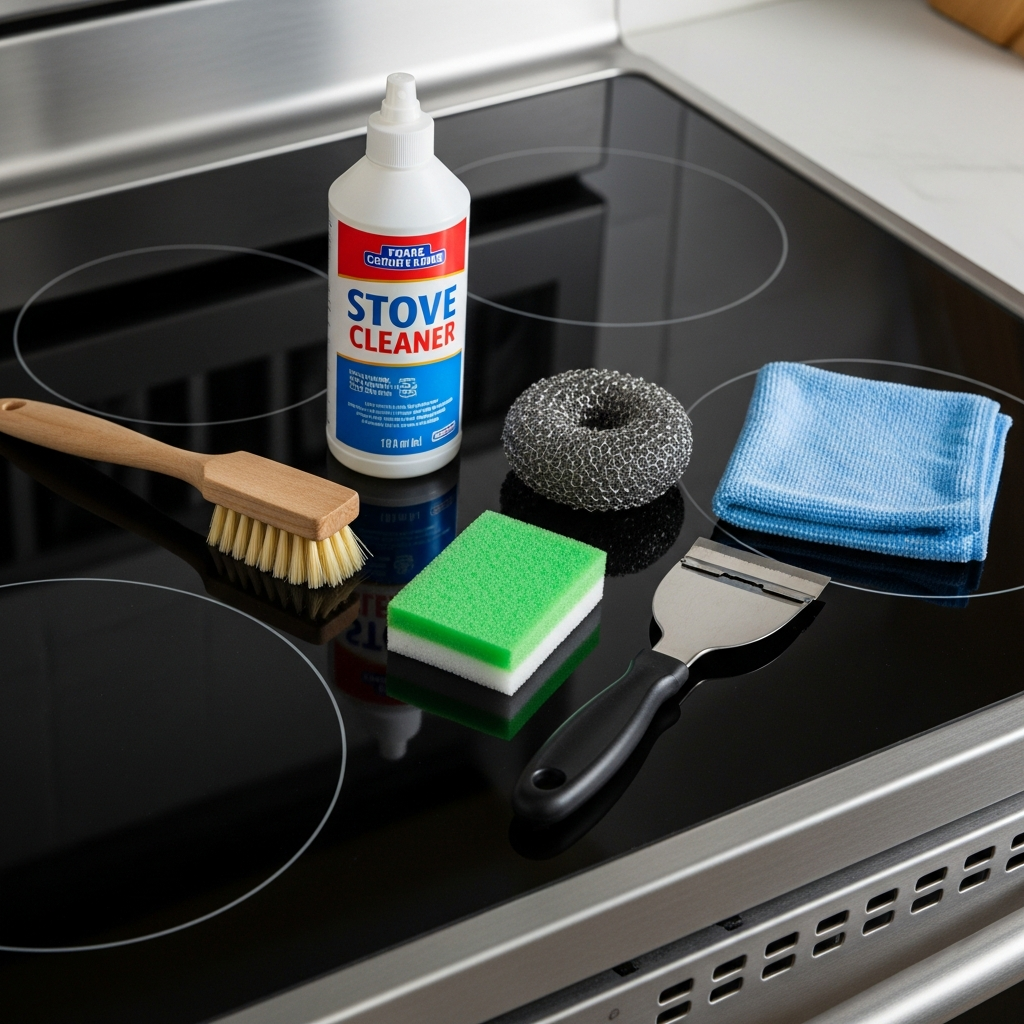
The stove is the undeniable workhorse of the kitchen, the command center where raw ingredients are transformed into meals. It is also, by nature of its function, the appliance most prone to filth. Every splatter of oil, every boil-over of pasta water, and every dropped crumb contributes to a layer of grime that, if left unchecked, hardens into a substance nearly as tough as the metal it sits upon. Cleaning a stove is not merely a matter of aesthetics; it is a matter of safety and efficiency. A grease-laden stovetop is a fire hazard, and clogged burner ports result in uneven heating that ruins food. Yet, despite its importance, stove cleaning is often performed incorrectly, with homeowners using the wrong chemicals on the wrong surfaces, scratching delicate glass, or neglecting the hidden areas where grease accumulates the most. Mastering the art of stove maintenance requires understanding the specific materials you are working with-whether it is tempered glass, cast iron, or enamel-and applying the right chemical and mechanical leverage to remove residue without causing damage. 1.Glass-Ceramic Cooktop The glass-ceramic cooktop, a staple of modern kitchens, presents a unique paradox: it is the sleekest surface to look at but often the most frustrating to maintain. The smooth, black surface shows every fingerprint and dust mote, but the real enemy is burnt-on food. A common mistake is attacking these surfaces with abrasive scouring pads. The rough side of a standard kitchen sponge is practically sandpaper to a glass cooktop. Over time, this creates a haze of micro-scratches that dulls the finish and, more importantly, traps dirt, making future cleaning even harder. The correct tool for a glass top is not a scrubber, but a razor blade scraper. When food is burnt onto the surface-especially sugary substances which can actually pit the glass if left to cool-a metal scraper held at a forty-five-degree angle is the only way to physically shear the carbon off without damaging the substrate. This should be done while the surface is wet with a specific glass cooktop cleaner or a paste of baking soda and water, which acts as a lubricant. The goal is to lift the debris, not grind it into the glass. Polishing with a dry microfiber cloth afterwards is what restores the shine, but the heavy lifting is done by the blade. 2.Gas Stove Gas ranges offer a completely different set of challenges, primarily centered around the heavy, cast-iron grates. These grates are porous and subjected to direct flame, meaning that grease spills are baked into the iron almost instantly. Scrubbing these by hand at the sink is a labor-intensive task that rarely yields perfect results. The structure of the grates, with their many corners and rough texture, shreds sponges and resists brushes. The most effective method for cleaning heavy cast iron grates utilizes the chemistry of ammonia fumes. By placing the grates inside a heavy-duty garbage bag with a splash of ammonia and sealing it tight for twenty-four hours, you allow the fumes to penetrate the grease. The ammonia breaks down the bond between the carbonized food and the iron. When you open the bag the next day-preferably outside to avoid inhaling the strong fumes-the grime usually wipes off with minimal scrubbing. This method saves hours of physical labor. It is important, however, to rinse them thoroughly and dry them completely, perhaps even placing them in a warm oven for a few minutes, to prevent rust from forming on the exposed iron. Beneath the grates lie the burner caps and heads, the actual machinery of the gas stove. If your flame is yellow instead of blue, or if the ignition clicks incessantly before lighting, the cause is almost always a clogged port. Food spills can block the tiny holes where gas escapes, disrupting the flow and air mixture. Cleaning these requires precision, not brute force. A straightened paper clip or a needle can be used to gently clear the ports, but one must be careful not to break the metal tip off inside the hole. The burner heads themselves can be soaked in warm soapy water, but the electrical igniter-the little ceramic nub that sparks-must remain dry. If this ceramic piece gets wet or coated in cleaner, the stove will not light until it has dried out completely. Reassembling the burners requires checking the alignment; a cap that sits slightly askew will result in a dangerous, uneven flame that can flare up unexpectedly. 3.Electric Stove Electric coil stoves, often seen in older apartments, are frequently neglected because they seem difficult to disassemble, but they are actually the most modular of all designs. The coils themselves rarely need cleaning because they get hot enough to burn off most residue, but the drip pans beneath them are magnets for disaster. These metal bowls catch everything that falls through the coils. When they are coated in black, carbonized grease, they become a smoke generator every time the stove is turned on. While many people wrap these in aluminum foil to avoid cleaning them, this is a dangerous practice that can trap heat and melt the wiring or cause a short circuit. Drip pans are inexpensive and should be viewed as semi-disposable. If they are rusted or hopelessly caked, replacing them is safer and more effective than scrubbing. If they are salvageable, they should be removed and boiled in a mixture of water and vinegar to loosen the charred remains. The coils themselves pull out, but one must be careful never to submerge the electrical contacts in water. 4.Control Panel and Buttons The control panel and knobs are the most touched but often the least cleaned parts of the stove. Because they are usually located above the cooking surface or on the front face, they are constantly bombarded with microscopic grease splatters. Over time, this grease works its way behind the knobs, acting as a glue that makes them difficult to turn. To clean this area effectively, the knobs must be pulled off. Simply wiping around them pushes

Make Your Stove Look New Again with These Simple Tools Read More »

Woman cleaning the counter with pH-neutral products next to her.

Understanding pH-Neutral Cleaners: The Complete Guide

What pH-Neutral Cleaners Are and Why Your Surfaces Thank You for Them Somewhere between the vinegar bottle and the oven degreaser sits the most important concept in household chemistry: a balanced pH. Master it and you move from aggressive scrubbing that quietly damages finishes to gentle, sustainable maintenance that keeps stone, wood, and tile looking new for decades. This guide explains what a pH-neutral cleaner actually does, exactly where it is essential, where it fails, and how to use one like a professional. The pH Scale in Plain Language The pH scale measures how acidic or alkaline a water-based solution is, running from 0 to 14. Pure water sits at 7, dead center, and is the model of neutral. Below 7 lands acid, with vinegar and lemon juice as the classic household examples. Above 7 is alkaline, also called basic, a club that includes bleach, ammonia, and most oven degreasers. The further a product strays from 7, the more chemically reactive and potentially caustic it becomes. That reactivity is a double-edged sword: it is what lets strong cleaners dissolve hard water stain or cut heavy grease, and it is also what ruins surfaces that never stood a chance against them. Health Canada’s resource on using household products safely makes the same point about reading labels and respecting product strength. What a Neutral Cleaner Actually Does A pH-neutral soap is a surfactant formulated to sit at or very near 7. It lifts dirt, oils, and grime off a surface and suspends them so they can be wiped away, without trying to dissolve, etch, or strip the material underneath. Its action is mechanical, breaking the bond between soil and surface rather than attacking the surface itself. Think of it as the do-no-harm principle of cleaning: the default choice for any material that a strong acid or alkali would permanently damage. Natural Stone: The Strongest Case for pH 7 Marble, limestone, travertine, and onyx bring luxury into a home and extraordinary vulnerability with them. These stones are largely calcium carbonate, which reacts violently with acid. Even a “natural” splash of vinegar on a marble counter sets off a reaction that dissolves a microscopic layer of stone. The result, called etching, looks like a dull whitish stain but is physical damage that no wipe can undo; removing it means professional re-honing and polishing. Alkaline cleaners are less dramatic but still wrong, dulling the finish and working into pores over time. A pH-neutral cleaner is the only recommended routine product for these calcium-based stones. Granite etches far less readily, yet harsh chemicals degrade the sealant that protects it from stains, so neutral soap remains the wisest daily choice. Floors, Leather, and Fabrics The same preservation logic protects your floors. A sealed hardwood floor is defended by its finish, not the wood beneath, and repeated washes with high-alkaline cleaners slowly strip that polyurethane layer. The floor may look clean today while growing duller and thinner with every mop. A properly diluted pH-neutral floor cleaner lifts soil off the finish without eating it. Manufacturers of luxury vinyl tile and laminate almost universally specify neutral cleaners for the same reason: harsh chemistry clouds or embrittles the factory wear layer, permanently marring the look and often voiding the warranty. Leather, a natural skin kept supple by its own oils, reacts the same way to alkaline soaps by drying, cracking, and fading, while delicate upholstery and clothing respond far better to a neutral spot-cleaning solution. Professionals follow that order of force: start with the gentlest method that can work. Where pH-Neutral Cleaners Hit Their Limits Neutral products are masters of maintenance, not miracle workers. Three common jobs need something else: Hard water stains and soap scum. These are alkaline mineral deposits of calcium and magnesium, so an acidic cleaner is required to break the bonds. Baked-on stovetop or oven grease. Polymerized oil needs a moderately alkaline degreaser; a neutral soap simply lacks the power. Disinfecting. Neutral soaps clean but do not inherently kill germs. Countertops touched by raw meat or a bathroom during flu season need a dedicated disinfectant applied after cleaning, as the CDC’s home cleaning and disinfecting guidance describes. Strong chemistry also demands respect: never blend cleaning products, and store them per Health Canada’s household chemical safety rules, since mix-ups like combining bleach with other cleaners can release toxic gas. Smart Technique: Dilute, Two-Bucket, Microfiber Most neutral cleaners ship as concentrates, so dilute exactly to the label. Too much product leaves a sticky film that attracts fresh dirt, the opposite of the goal. For floors, the two-bucket method keeps things honest: one bucket holds cleaning solution, the second holds clean rinse water, so the mop never redistributes what it lifted. On countertops, pair the cleaner with a quality microfiber cloth whose fibers trap soil instead of pushing it around. Lift the dirt, remove it, leave nothing behind but a clean surface. The sensible arsenal is small: a neutral workhorse for the vast majority of daily and weekly tasks, plus acidic and alkaline specialists reserved for the specific problems that truly need them. Which Cleaner for Which Surface Surface or soil Right chemistry Why Marble, limestone, travertine, onyx pH-neutral Acids etch calcium carbonate instantly Granite and sealed stone pH-neutral Protects the stain-blocking sealant Sealed hardwood, LVT, laminate pH-neutral, diluted Spares the wear layer and the warranty Leather, upholstery, delicates pH-neutral Keeps natural oils and dyes intact Hard water and soap scum Mildly acidic Alkaline minerals dissolve in acid Baked-on grease Mildly alkaline degreaser Saponifies polymerized oils Germ-sensitive counters Clean, then disinfect Neutral soap lifts soil, not pathogens pH-Neutral Cleaner FAQ How do I know if a cleaner is truly pH-neutral? The label should say pH neutral or pH 7. If it does not, contact the manufacturer; a generic “all surface” claim is not a promise, since many multi-purpose products lean alkaline. Is a diluted neutral cleaner safe for everyday mopping? Yes, and it is the recommended routine for sealed floors and stone. Use weak solution, a well-rinsed mop

Understanding pH-Neutral Cleaners: The Complete Guide Read More »

5 Reasons Why Hiring a Cleaning Service is the Best Form of Self-Care

Why hire a specialized cleaning service? The modern home is a hub of activity, a place of work, rest, and family life. Yet, maintaining its cleanliness can feel like a relentless, never-ending task. The dust settles almost as soon as it’s wiped away, the floors seem to attract dirt, and the kitchen and bathrooms demand constant attention. For many, the weekend, which should be a time for relaxation and recharging, is instead consumed by a long list of chores. This constant cycle of cleaning can become a significant source of stress and a drain on our most valuable resource: time. It is in this gap between the desire for a clean, peaceful environment and the reality of a busy life that a residential house cleaning service finds its purpose, offering not just a service, but a solution to a pervasive modern problem. 1.Quality of Life Hiring a professional cleaning service is often viewed as a luxury, but it is more accurately described as an investment in your quality of life. Consider the hours spent each week sweeping, mopping, scrubbing, and dusting. For a moderately sized home, this can easily add up to four, five, or even more hours. A professional service reclaims those hours for you, handing them back to be spent on what truly matters. This could mean more time with family, pursuing a hobby, exercising, or simply enjoying a well-deserved rest. The cumulative effect of this reclaimed time is profound, reducing burnout and allowing for a better work-life balance. It transforms the home from a place of constant obligation into a true sanctuary, a space you can enter after a long day and immediately feel at ease, rather than being confronted with a list of tasks that need doing. 2.Quality of Cleanliness Beyond the gift of time, there is the undeniable difference in the quality of the clean itself. A professional cleaner brings a level of expertise and efficiency that is difficult for the average homeowner to replicate. They are trained in the most effective methods and understand the specific needs of different surfaces. They know which products to use on natural stone versus laminate, how to clean stainless steel without leaving streaks, and the best techniques for removing stubborn soap scum from glass shower doors. This knowledge prevents costly damage that can result from using the wrong chemical or an abrasive sponge on a delicate surface. Furthermore, professional services come equipped with commercial-grade tools and supplies that are often more powerful and effective than standard consumer products. Their high-powered vacuums with HEPA filters can capture a significantly higher percentage of dust, allergens, and pet dander, leading to improved indoor air quality. This is particularly beneficial for households with allergy sufferers, asthmatics, children, or pets. The result is not just a home that looks clean, but one that feels and is, on a microscopic level, healthier. The process of a professional clean is systematic and thorough. Cleaners typically work with a detailed checklist, ensuring that no area is overlooked. They employ methodical strategies, such as cleaning from top to bottom to ensure dust and debris fall downwards before the floors are addressed, and working from one side of a room to the other. This structured approach guarantees consistency and completeness. A standard recurring clean will typically involve a comprehensive dusting of all surfaces, including furniture, shelves, and window sills; cleaning and disinfecting kitchen countertops, sinks, and appliance exteriors; scrubbing toilets, showers, tubs, and bathroom vanities; and vacuuming carpets and mopping hard floors. This regular maintenance keeps the home at a consistent level of cleanliness, preventing the deep buildup of grime. 3.Deep Cleaning For homes that have gone some time without a thorough cleaning or for clients new to a service, a deep clean is often recommended. This is a far more intensive and detailed service that addresses the areas often missed in a regular routine. A deep clean will include all the tasks of a standard clean but will go much further. It can involve washing baseboards and trim, cleaning light fixtures and ceiling fans, wiping down doors and door frames, cleaning behind and underneath furniture and appliances, scrubbing grout lines, and cleaning the interior of windows. This is the reset button for your home, tackling the accumulated dirt and dust in every nook and cranny, and establishing a new baseline of clean that makes subsequent maintenance easier. Specialized services like move-in and move-out cleanings are another critical offering. Preparing a home for sale or ensuring a new home is pristine before you unpack is an enormous task on top of the already stressful process of moving. A move-out clean is designed to leave the property in immaculate condition for the next occupants, often a requirement for retrieving a security deposit. This is the most exhaustive clean of all, performed on an empty home. Every interior surface is addressed, including the inside of all cabinets, drawers, closets, the oven, and the refrigerator. It ensures the home is presented in its best possible light, which can be a significant factor for real estate agents and potential buyers. Conversely, a move-in clean provides immense peace of mind, sanitizing the space and ensuring you are starting your new chapter in a fresh, thoroughly cleaned environment. 4.Trust and Security One of the most significant barriers for people considering a cleaning service is the idea of trust and security. Inviting someone into your personal space requires confidence in their professionalism and integrity. This is why reputable cleaning companies place such a high emphasis on their hiring and training processes. They conduct background checks on their employees and ensure they are thoroughly vetted. Furthermore, professional services are bonded and insured. Bonding provides protection against theft, while insurance covers any accidental damage that might occur to your property during the cleaning process. This comprehensive protection offers homeowners the peace of mind that they are working with a trustworthy organization that stands behind its work and its people. The relationship with a cleaning service is

5 Reasons Why Hiring a Cleaning Service is the Best Form of Self-Care Read More »