









How to Deep Clean Your Yoga Mat
A yoga mat is a deeply personal piece of equipment. It is more than rubber or foam: it is a portable sanctuary where you connect with your breath, challenge your body, and find calm and focus. That close contact comes with a hygienic responsibility. With every practice, the mat absorbs sweat, body oils, dust from the floor, and microscopic bacteria. Over time this buildup makes the mat slippery, grimy, and odorous. Cleaning your yoga mat is not just an aesthetic chore. It preserves grip and integrity, extends the mat’s lifespan, and keeps your practice space clean, healthy, and inviting.
Know Your Mat Material First
The first principle of yoga mat care is understanding the material. Most common mats are PVC (polyvinyl chloride) or TPE (thermoplastic elastomer), durable closed-cell materials that do not absorb moisture readily. Natural rubber mats offer exceptional grip and eco-friendly properties, but they are open-cell, more porous, and absorb liquids. Newer high-performance mats may have a polyurethane top layer designed to absorb moisture for a non-slip grip. The wrong product can be disastrous: a harsh chemical degrades natural rubber, while an oily solution permanently ruins the grip of a polyurethane surface. Always check the manufacturer’s website for cleaning recommendations specific to your mat.
Daily Wipe-Down Routine
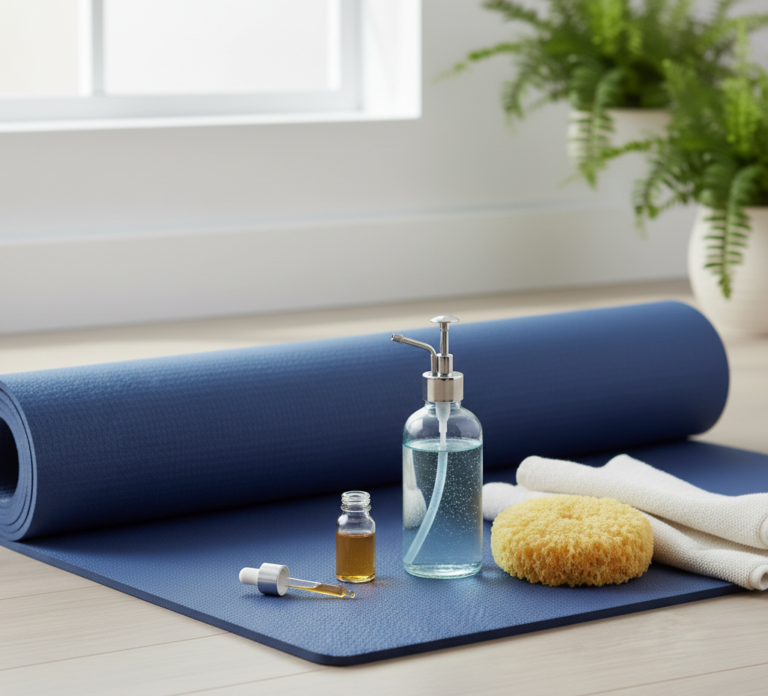
A quick wipe-down after each practice is the single most effective way to prevent deep-seated grime. Make a simple daily spray at home: mix roughly three parts water to one part white vinegar in a small spray bottle. The mild acidity breaks down light sweat and oils and acts as a natural disinfectant and deodorizer. Add a few drops of a high-quality essential oil to counter the vinegar scent: tea tree oil has natural antibacterial and antifungal properties, and lavender offers a calming scent with antimicrobial benefits. Spritz the mat lightly and wipe it with a clean, damp microfiber cloth. The crucial step is letting the mat air dry completely before rolling it up. Rolling up a damp mat is the primary cause of mildew and musty odors.
Monthly Deep Clean for PVC and TPE Mats
A periodic deep clean removes the stubborn buildup that makes a mat feel slippery and dull. Do it at least once a month, or more often with frequent practice or hot yoga. For standard PVC or TPE mats the process is straightforward:
- Fill a bathtub or large basin with a few inches of lukewarm water, just enough to submerge the mat.
- Add no more than a single teaspoon of a gentle, clear, non-moisturizing dish soap.
- Soak the mat for ten to fifteen minutes to loosen embedded grime.
- Scrub both sides gently with a soft cloth or non-abrasive sponge, focusing on hand and foot areas.
- Rinse meticulously with a shower head until the water runs completely clear with no bubbles.
- Roll the mat inside a towel sandwich, pressing firmly, then hang it to air dry for 24 to 48 hours.
Too much soap leaves residue that makes the mat dangerously slippery, so keep the rinse thorough and the soap minimal.
Special Care for Open-Cell and Polyurethane Mats
Open-cell mats such as natural rubber behave like sponges. Avoid a full soak when possible: lay the mat on the shower floor, spray it down with lukewarm water, and clean with a highly diluted, gentle soap solution and a soft cloth. Rinse even more thoroughly to flush soap from the porous structure, then hang it to dry for 48 hours or more. Never use vinegar on natural rubber, as the acid breaks down the rubber over time, and keep rubber mats out of direct sunlight, which makes them brittle and discolored.
Polyurethane top layers are absorbent but sensitive. Never use essential oils, harsh chemicals, or abrasive scrubbers on them, as these can permanently ruin the sticky feel. Deep clean with the same gentle submersion method as a PVC mat, using an extremely small amount of very mild soap and an exceptionally thorough rinse.
For a persistent musty smell in any mat, sprinkle a light, even layer of baking soda over the dry surface, let it sit for at least thirty minutes, and vacuum it up with a brush attachment. The baking soda absorbs odors without liquids.
| Mat type | Cleaning method | Soap and additives | Drying time |
|---|---|---|---|
| PVC or TPE | Submerge in lukewarm water | Max 1 teaspoon mild dish soap | 24 to 48 hours, hung |
| Natural rubber | Spray-down, no full soak | Highly diluted gentle soap, no vinegar | 48 hours or more, out of sunlight |
| Polyurethane top layer | Gentle submersion | Very mild soap, no oils or abrasives | 24 to 48 hours, hung |
By understanding your mat’s material and adopting a routine of daily maintenance plus monthly deep cleaning, you keep a stable, hygienic foundation for your practice, allowing you to focus on your breath instead of the grime beneath your feet. The same principle applies to your home: a clean environment supports a peaceful, healthy life. Toronto Shine Cleaning provides professional deep cleaning services for every surface, with bonded and insured cleaners and a $1,000,000 insurance policy, and regular maid service keeps homes serene between deep visits. See what clients say on our reviews page or check pricing for your home size. Call (647) 424-0355 to book. For more on why regular movement and hygiene matter, read the CDC on the benefits of physical activity and the Government of Canada guide on indoor air contaminants, including mold and moisture.
Yoga Mat Cleaning FAQ
How often should I deep clean my yoga mat? Deep clean at least once a month, and more often if you practice frequently or attend hot yoga. Wipe the mat down after every session with a water and vinegar spray, and always let it dry completely before rolling it up.
What is the best daily cleaner for a yoga mat? A spray of three parts water to one part white vinegar with a few drops of tea tree or lavender essential oil works well for PVC, TPE, and most closed-cell mats. Wipe with a damp microfiber cloth and air dry before storing.
Why does my yoga mat smell musty? Musty odors come from rolling up a damp mat, which traps moisture and lets mildew grow. Dry the mat fully after every clean, and for existing odors sprinkle baking soda over the dry surface, wait thirty minutes, and vacuum it up with a brush attachment.
Can I use vinegar on a natural rubber mat? No. Vinegar’s acidity breaks down natural rubber over time. Clean rubber mats with a highly diluted, gentle soap solution, rinse very thoroughly, and dry them away from direct sunlight for 48 hours or more.
Why is my yoga mat slippery after washing? Soap residue is the usual cause. Use no more than one teaspoon of mild dish soap for a full tub, then rinse until the water runs completely clear. A dry, well-rinsed mat regains its grip within a session or two.